Coeur d'Alene REALTOR: David Puccetti July 5, 2026

Kootenai County Real Estate Market Conditions (June 2026)

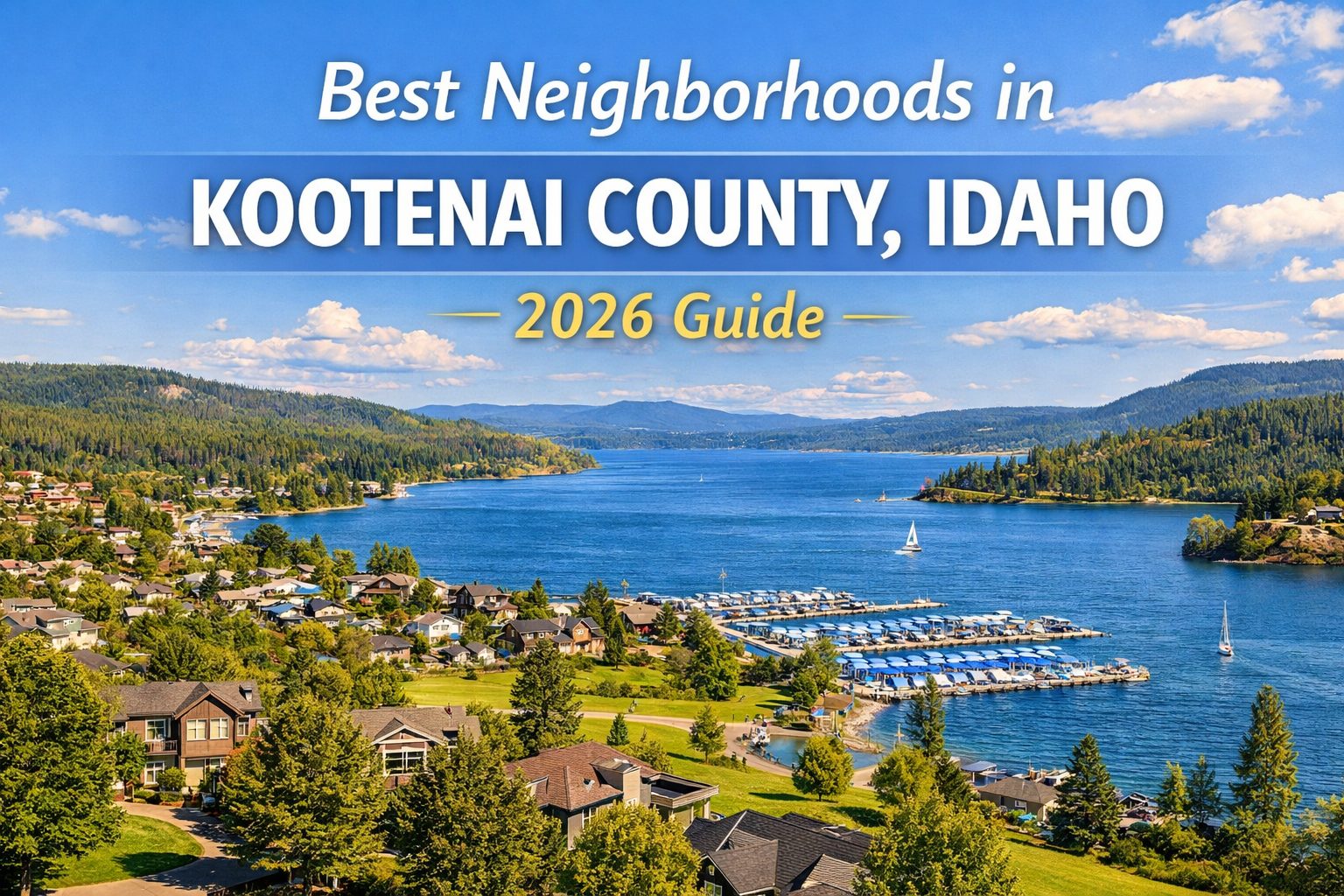
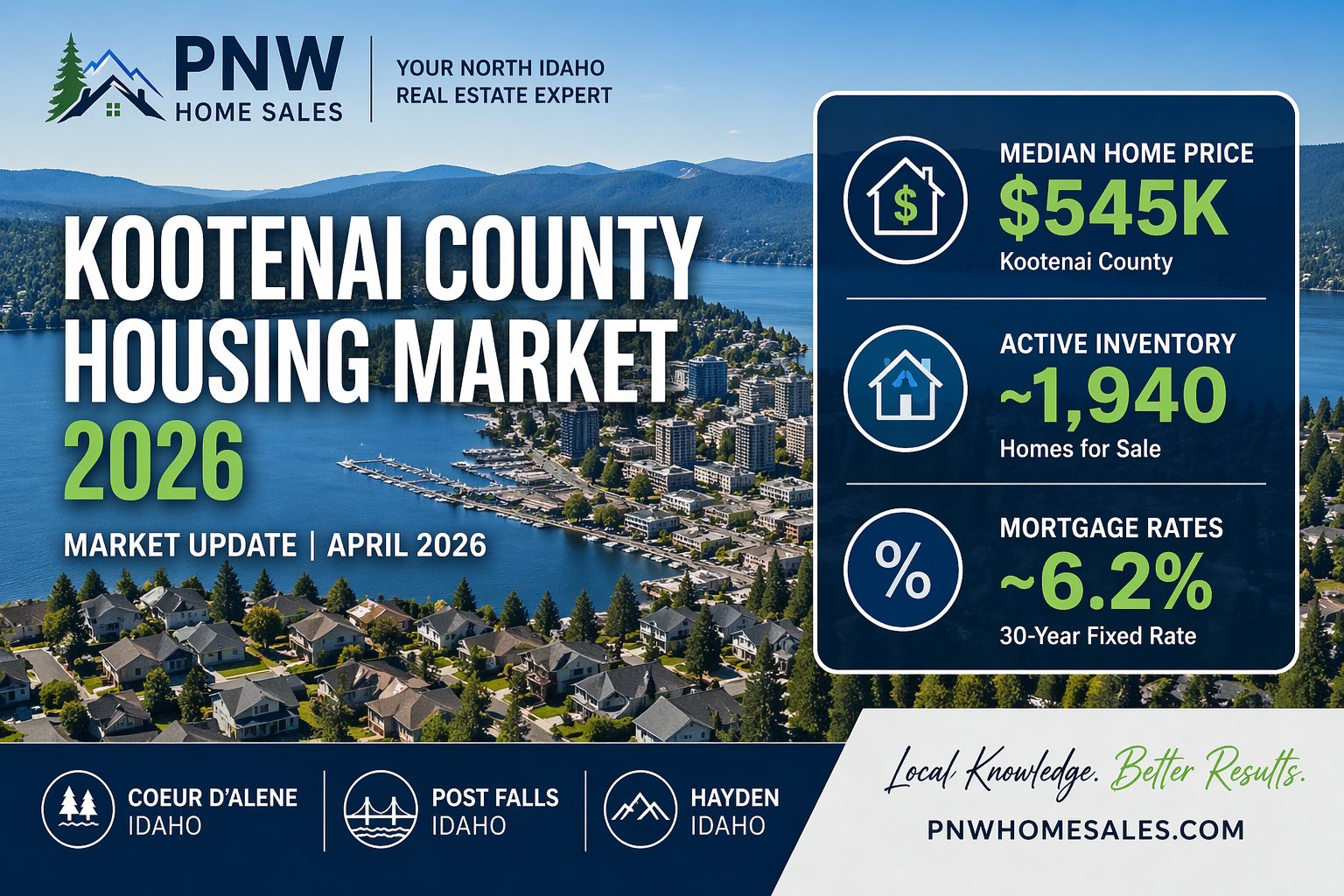
Kootenai County real estate market update June 2026 showing Coeur d’Alene home prices, inventory trends, and housing market insights

Kootenai County Real Estate Market Conditions June 2026 | Prices, Inventory & Trends

Updated June 5, 2026

The Kootenai County real estate market is moving into early summer with more balance than buyers and sellers saw during the tightest years of the North Idaho housing market. Prices are still holding up across much of the county, but buyers have more homes to compare, more room to evaluate condition, and more reason to be selective before writing an offer.

The biggest June 2026 theme is not a market crash or a return to pandemic-style bidding wars. It is a more segmented market. Well-priced homes in desirable locations can still move quickly, especially in Post Falls, Hayden, and attractive Coeur d’Alene neighborhoods. Overpriced listings, dated homes, and higher-end properties with more competition may need sharper pricing, stronger presentation, or more patience.

This update blends the latest publicly available closed-sale trend data with current listing and mortgage-rate context so buyers and sellers can understand both where the market has been and what it feels like right now.

View Latest Kootenai County / CDA Area Market Update

June 2026 Quick Take

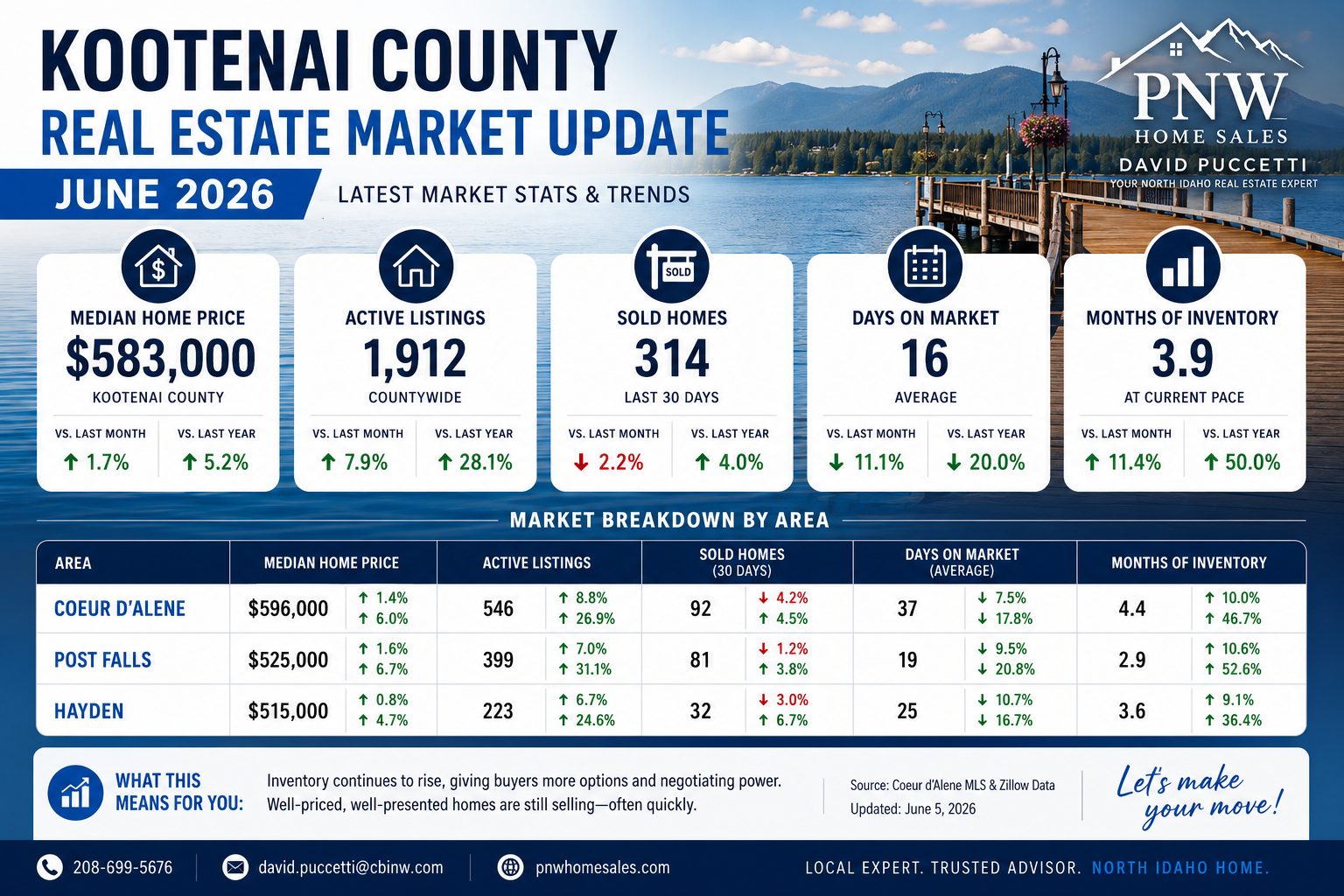
  • Kootenai County median sold price: about $583,000 based on recent public market trend data
  • Coeur d’Alene median sold price: about $596,000 based on recent public market trend data
  • Post Falls median sold price: about $525,000 based on recent public market trend data
  • Hayden median sold price: about $515,000 based on recent public market trend data
  • Kootenai County active inventory: roughly 1,900 homes in broader public listing snapshots
  • Coeur d’Alene active listings: roughly 546 homes in recent public listing snapshots
  • Post Falls active listings: roughly 395 to 399 homes in recent public listing snapshots
  • Hayden active listings: roughly 205 to 233 homes in recent public listing snapshots
  • Current 30-year fixed benchmark: roughly 6.48% as of early June 2026

Kootenai County Market Snapshot

Countywide, the market is looking more normal and less extreme. Recent public trend data shows Kootenai County prices still above last year, but buyers are also seeing a healthier amount of inventory than during the tightest periods. That combination creates a market where both sides still have leverage depending on property type, price range, condition, and location.

📊 Kootenai County Housing Market – June 2026 Update

Current public market snapshot of pricing, pace, demand, and inventory across North Idaho’s top markets.

Kootenai County

~$583,000

Recent Median Sold Price

⏱ ~16 Days on Market

🏡 ~314 Homes Sold in Latest Public Monthly Snapshot

📦 ~1,900 Active Listings in Broader Public Listing Snapshot

→ Balanced, More Inventory-Sensitive Market

Coeur d’Alene

~$596,000

Recent Median Sold Price

⏱ ~37 Days on Market

🏡 Lifestyle Demand Remains Strong

📦 ~546 Active Listings in Recent Public Snapshot

→ Premium Market, More Selective Buyers

Post Falls

~$525,000

Recent Median Sold Price

⏱ ~19 Days on Market

🔥 Strong Demand in Practical Price Bands

📦 ~395–399 Active Listings in Recent Public Snapshots

↑ Still One of the Faster-Moving Segments

Hayden

~$515,000

Recent Median Sold Price

⏱ ~25 Days on Market

🏡 Demand Varies by Neighborhood and Price Point

📦 ~205–233 Active Listings in Recent Public Snapshots

→ Neighborhood-Driven Market

📌 What This Means Right Now:

  • Inventory is healthier than it was in the tightest years, giving buyers more options and better comparison power.
  • Prices are still holding up overall, but buyers are more selective about condition, location, and value.
  • Post Falls remains one of the county’s more practical and active markets for buyers watching affordability.
  • Coeur d’Alene still carries premium lifestyle demand, but higher-priced listings need realistic positioning.
  • Hayden remains highly neighborhood-specific, with different buyer behavior depending on lot, setting, condition, and price point.

What the market feels like right now: Kootenai County is not behaving like a one-speed market. A clean, well-priced home in a desirable price range can still generate quick interest. A home that is priced ahead of the market, needs updates, or competes with several similar listings may sit longer and face price pressure.

Buyers have more breathing room than they did during the most aggressive years. That does not mean demand has disappeared. It means buyers are comparing homes more carefully, watching payment affordability, and pushing back when a listing feels stretched.

If you are relocating and still comparing areas, start with the broader lifestyle and community guides for Coeur d’Alene, Post Falls, Hayden, and the full Kootenai County cities and communities guide.

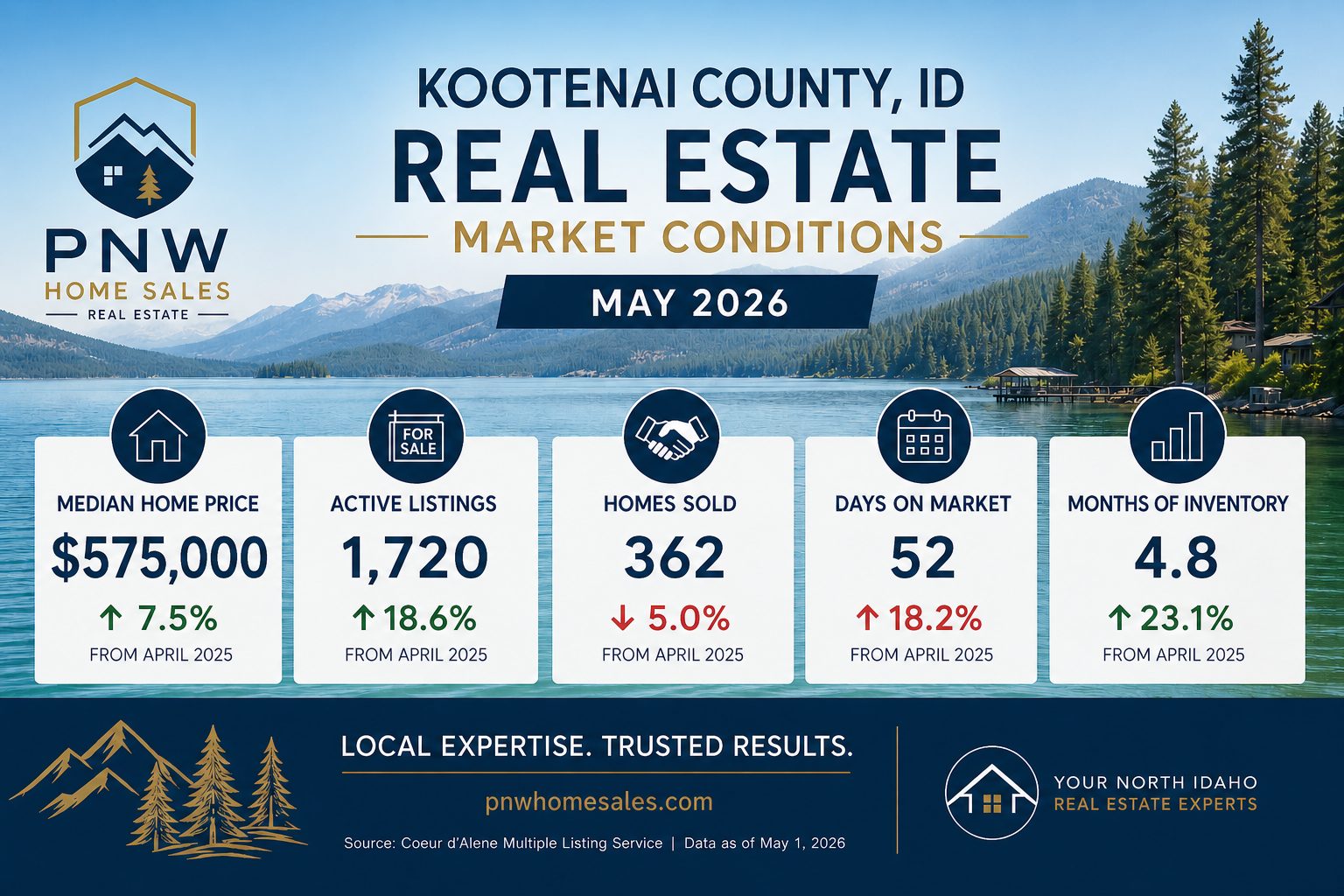
For a historical comparison, see our March 2026 Kootenai County housing market update.

👉 Explore available homes: Coeur d’Alene homes for sale | Post Falls homes for sale | Kootenai County listings

Coeur d’Alene Housing Market Update

Coeur d’Alene continues to hold premium lifestyle appeal in North Idaho. It remains one of the county’s most watched markets because of the lake lifestyle, downtown access, established neighborhoods, recreation, and relocation demand. Recent public data shows Coeur d’Alene median sale pricing in the upper-$500Ks to low-$600Ks depending on the source and timeframe used, which keeps it above many surrounding Kootenai County markets.

For sellers in Coeur d’Alene, strong visuals, accurate pricing, and neighborhood-specific positioning matter more than ever. Buyers are still attracted to the city, but they are also comparing payment, condition, updates, and nearby alternatives more carefully. Homes with strong presentation, good locations, and realistic pricing can still stand out, while listings that rely only on the Coeur d’Alene name may need more time.

Related reading: Living in Coeur d’Alene, Kootenai County neighborhood comparisons, and Relocating to Coeur d’Alene.

Post Falls Housing Market Update

Post Falls remains one of the county’s key value markets. Its location, relative affordability compared with many Coeur d’Alene segments, access to I-90, and proximity to Spokane continue to keep it attractive for a wide range of buyers. The city is still highly relevant for first-time buyers, relocation buyers, move-up buyers, and households looking for more practical pricing without leaving Kootenai County.

In the current environment, homes that are clean, move-in ready, and competitively priced can still draw quick action. At the same time, the higher inventory environment means buyers have more alternatives and are less likely to chase overpriced listings. Post Falls remains active, but sellers still need to respect current competition.

Learn more here: Living in Post Falls, Idaho.

Hayden Housing Market Update

Hayden continues to attract buyers who want a residential feel, access to golf, Hayden Lake, recreation, larger lot options, and a slightly different lifestyle profile than central Coeur d’Alene. Depending on neighborhood and property type, Hayden can command stronger pricing because of lot quality, setting, home style, and buyer preferences.

Buyers should pay close attention to the specific micro-location and home type, because Hayden is not a uniform market. A home near Hayden Lake, a property with acreage, a newer neighborhood home, and an older in-town home can all behave very differently. Sellers benefit most when the home is positioned around its real lifestyle advantages rather than generic market language.

Learn more here: Living in Hayden, Idaho.

Current Mortgage Rate Snapshot

Mortgage rates remain one of the biggest affordability variables in the market. As of early June 2026, the national 30-year fixed mortgage benchmark is roughly in the mid-6% range. That keeps monthly payment sensitivity high, especially for buyers shopping in the $450,000 to $700,000 range across Kootenai County.

💰 Mortgage Rates – June 2026 Update

Current national mortgage rate snapshot based on recent lender surveys and benchmarks.

30-Year Conventional

~6.48%

Fixed Rate Benchmark

📊 National Mortgage Survey

→ Most Common Loan Type

FHA Loan

Mid-6% Range

30-Year Fixed

💸 Lower Down Payment Options

→ Useful for Qualified Buyers

VA Loan

Varies by Lender

30-Year Fixed

🎖 For Eligible Veterans

→ Often Competitive for Eligible Buyers

USDA Loan

Varies by Lender

30-Year Fixed

🌲 Rural Property Eligible

→ Strong Option for Some North Idaho Areas

📌 What This Means for Buyers:

  • Rates are still in the mid-6% range, so payment planning remains critical.
  • Buyers should compare total monthly payment, estimated taxes, insurance, HOA costs, and loan fees.
  • More inventory gives buyers more room to compare, but good homes can still move quickly.
  • Rate movement and local inventory trends both matter when deciding whether to buy now or keep watching.

If you are planning to buy this year, rate movement still matters almost as much as price. In many Kootenai County price bands, even a modest rate shift can change monthly payment enough to affect search range and negotiating strategy.

You can also review more planning resources in the Buying & Selling Tips section.

What This Means for Buyers

Buyers have more opportunity to compare inventory, study neighborhoods, and negotiate with more discipline than they could in tighter markets. This can be a strong environment for relocation buyers who want to evaluate lifestyle fit, commute patterns, community feel, and long-term resale potential before moving.

The key is not assuming every listing is equally negotiable. A well-priced home in good condition may still require quick action, while a stale or overpriced listing may offer more room for negotiation. Buyers should watch both price and property quality.

If you are relocating from out of state, start with: Moving from California to Coeur d’Alene, Moving from Washington to Coeur d’Alene, and Moving from Seattle to Coeur d’Alene.

What This Means for Sellers

Sellers can still do very well in this market, but the strategy has changed. Price matters. Condition matters. Presentation matters. Overpricing tends to cost more in a market where buyers have alternatives and time to compare.

The listings that perform best are typically the ones that launch cleanly, show well online, align with the realities of nearby competition, and create confidence for buyers from day one. Sellers should pay close attention to active competition, recent pending activity, price reductions, days on market, and buyer feedback.

Thinking About Moving to Kootenai County, Idaho?

Whether you’re just starting your research or ready to make a move, I can help you navigate the Coeur d’Alene market with local insight and a strategy tailored to your goals.

  • ✔ Personalized home search based on your lifestyle and budget
  • ✔ Local insights on neighborhoods, schools, and hidden gems
  • ✔ Guidance on timing, pricing, and negotiation strategy
  • ✔ Help relocating from out of state: California, Washington, Texas & more

Let’s make your move to Coeur d’Alene simple and stress-free.

📞 Call or Text: 208-699-5676
📧 Email: david.puccetti@cbinw.com

Get Help Moving to Kootenai County, Idaho

David Puccetti | PNW Home Sales — Local Coeur d’Alene Real Estate Expert


Frequently Asked Questions

Is Kootenai County a buyer’s market or a seller’s market right now?

Kootenai County is more balanced than the ultra-competitive market many buyers remember. Inventory is healthier, buyers have more choice, and pricing strategy matters more, but desirable homes can still move quickly.

Are Kootenai County home prices still going up in 2026?

Recent public trend data shows Kootenai County prices still up year over year, but the market is not moving evenly across every city, price point, or property type. Condition, location, and pricing accuracy matter more than broad county averages.

Which area is more expensive right now: Coeur d’Alene, Post Falls, or Hayden?

Coeur d’Alene generally remains the premium lifestyle market, while Post Falls is often a more practical value option. Hayden varies significantly by neighborhood and property type, especially because higher-end homes and larger lots can pull listing prices higher.

Are mortgage rates still affecting buyer behavior?

Yes. Mortgage rates remain one of the biggest drivers of affordability and monthly payment. With the 30-year fixed benchmark around the mid-6% range in early June 2026, buyers are still payment-sensitive.

Where should relocating buyers start?

The best first step is comparing communities, neighborhoods, commute patterns, lifestyle fit, and budget before narrowing the search. Coeur d’Alene, Post Falls, Hayden, and Rathdrum can each feel very different depending on your goals.

What is the best way to price a home to sell in this market?

The best strategy is to price against current competition and buyer expectations, not outdated peak-market assumptions. Clean presentation, accurate positioning, and a strong launch strategy are just as important as price.

“`

Coeur d'Alene REALTOR: David Puccetti July 3, 2026

Buying a Home With Acreage in North Idaho: Wells, Septic, Roads and Hidden Costs

Buying a home with acreage in North Idaho featuring rural properties, land ownership, and country living guidance

Last updated: July 2026

Buying a Home With Acreage in North Idaho: Wells, Septic Systems, Private Roads, Zoning and Hidden Costs

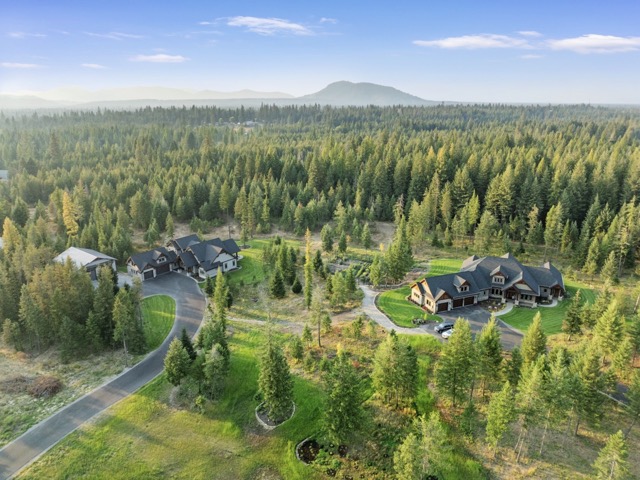
Buying a home with acreage in North Idaho can provide a lifestyle that is difficult to duplicate in a conventional subdivision. More land may mean greater privacy, room for a detached shop, space for recreational vehicles, fewer nearby neighbors, space for animals, and the ability to enjoy wooded surroundings, mountain views, or open pasture.

For many people moving to Idaho, acreage is a major part of the reason for relocating. Buyers may envision a quiet home outside Coeur d’Alene, a wooded property near Hayden, several usable acres in Rathdrum, or a rural residence near Athol, Spirit Lake, Hauser, Worley, or another smaller North Idaho community.

However, buying acreage involves more than comparing the house, parcel size, and purchase price. A rural property may rely on a private well rather than municipal water. Wastewater may be handled through an individual septic system. The driveway may connect to a private road maintained by neighboring owners. Internet service may be limited. Snow removal may become the owner’s responsibility. Zoning, recorded covenants, or septic capacity may restrict plans for livestock, an accessory dwelling unit, a home-based business, a shop, or future land division.

A beautiful five-acre property can be an excellent purchase, but acreage alone does not tell you whether the land is usable, accessible, buildable, properly documented, or affordable to maintain. The most important questions often involve systems, agreements, and physical conditions that are not immediately visible during a showing.

This guide explains what buyers should investigate before purchasing a home with acreage in North Idaho, including private wells, septic systems, shared roads, zoning, surveys, shops, livestock, wildfire exposure, internet availability, financing, insurance, and the hidden costs of rural homeownership.

Why Buyers Choose North Idaho Acreage

Acreage properties appeal to many types of buyers. Some people want privacy and separation from nearby homes. Others need room for a shop, boat, travel trailer, equipment, multiple vehicles, or outdoor hobbies. A buyer may want space for horses, chickens, gardens, fruit trees, or other small-scale agricultural uses.

For relocation buyers, acreage can also represent a significant lifestyle change. Someone leaving a dense urban or suburban area may be looking for a quieter setting, fewer immediate neighbors, more usable outdoor space, and greater flexibility in how the property is used.

Common reasons buyers search for North Idaho acreage include:

  • Greater privacy and separation from neighboring homes
  • Room for a detached shop or large garage
  • Storage for boats, RVs, trailers, ATVs, and equipment
  • Space for horses, chickens, or other animals
  • Gardening, orchards, greenhouses, or small-scale agriculture
  • Wooded surroundings or mountain views
  • Multigenerational living possibilities
  • Space for an accessory dwelling or guest area, where permitted
  • Home-based hobbies or businesses
  • Closer access to trails, lakes, hunting, and public land

North Idaho includes a wide range of acreage environments. Buyers can find open pasture, rolling farmland, heavily timbered parcels, gently sloping land, mountain properties, and homes surrounded by mixed forest.

The ownership experience can be very different from one property to another. An open parcel may be easier to fence, maintain, and build on, but it may offer less visual privacy. A heavily wooded property may feel secluded, but it can require tree management, wildfire mitigation, and careful evaluation of sunlight, drainage, and winter access.

Buyers who are still comparing locations may want to begin with the Kootenai County Cities and Communities Guide. Coeur d’Alene, Hayden, Post Falls, Rathdrum, Athol, Spirit Lake, Dalton Gardens, Hauser, Harrison, and surrounding rural areas each offer a different balance of land, access, services, commute time, and housing options.

Acreage Is Not the Same as Usable Acreage

One of the first mistakes rural buyers make is assuming every acre is equally useful. A listing may advertise five, ten, or twenty acres, but the entire parcel may not be suitable for building, grazing, gardening, equipment access, or recreation.

Conditions that can reduce the amount of practically usable land include:

  • Steep slopes
  • Seasonal drainage areas
  • Wetlands or saturated soils
  • Rock outcroppings
  • Utility easements
  • Access easements
  • Septic drainfields
  • Replacement drainfield areas
  • Shoreline or floodplain restrictions
  • Required building setbacks
  • Heavily forested terrain
  • Poor or shallow soils
  • Irregular parcel boundaries
  • Limited vehicle access

A two-acre parcel that is relatively level, open, well-drained, and conveniently located may provide more functional space than a ten-acre parcel consisting largely of steep or inaccessible terrain.

Buyers should look beyond the total acreage and ask:

  • How much of the property is reasonably usable?
  • Where are the legal property boundaries?
  • Is there enough level land for the buyer’s intended use?
  • Are there known wetlands or seasonal drainage areas?
  • Does the land receive enough sunlight for a garden or greenhouse?
  • Where are the septic tank, drainfield, and replacement area?
  • Would a shop fit within the required setbacks?
  • Can vehicles and equipment reach the intended building area?
  • How difficult will the property be to maintain during winter?

These questions are particularly important when a buyer intends to alter the property after closing. The fact that a neighboring owner has horses, a large shop, or a second dwelling does not establish that the subject property can be used the same way. Parcel size, zoning, permits, easements, septic capacity, and recorded restrictions may differ.

Define Your Intended Use Before Touring Acreage Homes

The best acreage property is not necessarily the one with the most land. It is the property that can support the buyer’s actual plans.

Before touring rural homes, buyers should identify their priorities:

  • Is privacy the primary goal?
  • Are horses, livestock, or chickens planned?
  • Is a large detached shop essential?
  • Will the buyer store an RV, boat, trailers, or commercial equipment?
  • Is dependable high-speed internet required for remote work?
  • Does the buyer hope to construct an accessory dwelling unit?
  • Is multigenerational living planned?
  • Does the buyer want to divide the land in the future?
  • Is gardening or small-scale agriculture important?
  • How much property maintenance can the buyer realistically handle?
  • Is easy year-round access more important than seclusion?

These priorities should guide both the property search and the due-diligence process. A home may be attractive and well priced but still be a poor match if the road is difficult in winter, the well cannot support substantial irrigation, or the zoning does not allow the buyer’s planned use.

Buyers interested in areas known for land and lower-density housing can review current Athol homes for sale and Rathdrum homes for sale. Both markets may offer acreage, shops, custom homes, and rural lifestyle properties, depending on current inventory.

Private Wells: What North Idaho Buyers Need to Understand

Many North Idaho acreage homes receive water from a private well rather than a public water system. A private well can provide dependable water for many years, but buyers should not assume that turning on a faucet proves the entire system is adequate.

A private well review may include:

  • Well depth
  • Original drilling records
  • Well casing and construction
  • Static water level
  • Pump age and condition
  • Pressure tank condition
  • Flow or production rate
  • Recovery rate
  • Water quality
  • Treatment equipment
  • Electrical controls
  • Supply-line condition
  • Access for future repair

Well Depth and Drilling Records

Well depth can be useful information, but a deeper well is not automatically better than a shallower well. Depth may affect drilling and replacement costs, pump requirements, mineral content, recovery characteristics, and access to different water-bearing formations.

When available, buyers should obtain the well log or original drilling report. A well log may identify the drilling date, total depth, casing details, static water level, geologic formations, and estimated production at the time of drilling.

A well log provides valuable historical information, but it does not prove that the current pump, pressure tank, electrical controls, or water quality are satisfactory. The system should be evaluated based on its current condition.

Well Flow and Recovery

Two related concepts are important when evaluating a well.

Flow or production rate generally describes how much water a well or pumping system can provide during a period of use.

Recovery rate describes how quickly water returns to the well after it has been pumped down.

A well may deliver a strong initial flow but recover slowly. This can become a concern during periods of sustained demand, such as running several showers, washing clothes, filling livestock water containers, and irrigating at the same time.

A buyer should evaluate the well in relation to the intended household and property use. A smaller household with limited exterior watering may have different requirements than a multigenerational household with animals, gardens, and extensive irrigation.

Water-Quality Testing

Clear water is not necessarily problem-free water. A buyer may consider testing for bacteria and other locally relevant water-quality characteristics through an appropriate laboratory.

Depending on the location and circumstances, testing may examine:

  • Total coliform bacteria
  • E. coli
  • Nitrates
  • Arsenic
  • Iron
  • Manganese
  • Hardness
  • pH
  • Sulfur odors
  • Other contaminants or minerals of concern

The appropriate test depends on the property, the well’s history, surrounding land uses, and the buyer’s concerns. Buyers should follow the laboratory’s sampling instructions because improper collection can affect the result.

If a treatment system is installed, determine:

  • What condition the system is intended to address
  • Whether the equipment is functioning
  • How frequently filters or treatment media must be replaced
  • Whether replacement components remain available
  • What annual maintenance may cost
  • Whether the untreated water has also been tested

Water softeners, sediment filters, ultraviolet systems, reverse-osmosis equipment, and other treatment components can be useful, but buyers should understand the underlying water condition rather than simply assuming the equipment solves every issue.

Well Equipment

The well itself is only one part of the water system. Other components may include a submersible pump, pressure tank, pressure switch, control box, electrical wiring, storage tank, supply lines, well cap, and filtration equipment.

A well may contain adequate water while the pump or pressure tank is approaching the end of its useful life. Intermittent pressure problems may result from equipment rather than the groundwater source.

Buyers should ask about the age, service history, and condition of the major components. A qualified well professional can explain how the system operates and identify visible concerns.

Shared Wells Require Additional Investigation

Some rural properties use a shared well serving two or more homes. A shared well can function effectively, but the arrangement should be clearly documented and understood before closing.

Buyers should look for a written and preferably recorded shared-well agreement addressing:

  • Which parcels are entitled to use the well
  • Where the well and related equipment are located
  • Access for testing, maintenance, and repairs
  • Ownership of the pump and electrical equipment
  • How electricity expenses are divided
  • Testing responsibilities
  • Repair-cost allocation
  • Water-use limitations
  • Irrigation or livestock use
  • Procedures when an owner does not pay
  • Dispute-resolution procedures
  • What happens if the well fails
  • Whether additional users may be connected

A handshake arrangement between neighboring owners is not the same as a complete written agreement. The buyer should also confirm whether the lender has specific requirements for shared-water systems.

When the well is located on a neighboring parcel, the buyer should understand the legal access rights for maintenance and repair. A shared system may become difficult to manage when the documents do not clearly address emergencies, equipment replacement, or unpaid expenses.

Water Rights, Irrigation, and Exterior Water Use

Having a private well does not necessarily mean the owner can use unlimited water for every purpose. Buyers planning extensive irrigation, agricultural activity, livestock use, or commercial use should investigate whether the existing water source and legal use are appropriate.

Questions may include:

  • Does the property have a separate water right?
  • Is the current use based on a domestic well?
  • How much land is currently irrigated?
  • Is livestock watering part of the existing use?
  • Is irrigation supplied by the domestic well, a separate well, or an irrigation district?
  • Are there annual assessments or service fees?
  • Are there limitations on expanding the use?
  • Is the water source shared with another parcel?

A listing statement describing an irrigation well or abundant water should be verified when water supply is material to the buyer’s intended use.

Septic Systems: Understanding What Is Underground

Many acreage homes use an individual septic system rather than a public sewer connection. A typical system includes a septic tank and a drainfield. Wastewater enters the tank, solids settle, and liquid effluent is distributed into the soil through the drainfield.

Because most of the system is underground, problems may not be obvious during a normal showing. A septic system can serve a property effectively for many years when it is properly designed, used, and maintained. It can also become a significant expense when the tank, piping, pumps, or drainfield fail.

Locate the Septic Tank and Drainfield

The buyer should determine:

  • Where the septic tank is located
  • Where the drainfield is located
  • Whether a reserve or replacement area exists
  • Whether vehicles have driven over the system
  • Whether large trees are growing near the drainfield
  • Whether structures, patios, driveways, or additions encroach on it
  • Whether surface water drains toward the system

A drainfield should not be treated as ordinary open land. Parking heavy equipment, constructing a shop, installing a driveway, or planting large trees over the field may damage the system or prevent future access.

The replacement area can be equally important. It may be reserved for a future drainfield if the original system fails. A buyer planning a shop, barn, addition, pool, or accessory dwelling should determine whether those plans would conflict with the existing or replacement septic area.

Septic Inspection

A septic inspection should be completed by an appropriate professional. The scope may include locating the tank, opening accessible lids, observing liquid levels, checking visible baffles, identifying signs of backup, reviewing pumping history, assessing the drainfield area, and examining available permits or records.

Inspection scope varies, so the buyer should understand what will and will not be evaluated.

A tank that was recently pumped is not automatically evidence that the complete septic system is operating properly. Pumping removes accumulated solids but does not necessarily establish that the drainfield is functioning as intended.

Septic Capacity and Bedroom Count

Septic systems are often approved based on a particular design capacity, which may be associated with the number of bedrooms. A home may physically contain several rooms that could be used as bedrooms while the septic approval supports fewer bedrooms.

This matters when:

  • Advertising or reselling the home
  • Adding bedrooms
  • Converting a basement
  • Building an accessory dwelling
  • Expanding the home
  • Creating a multigenerational living arrangement

Buyers should compare the current home configuration and intended use with the available septic documentation. A large house on acreage does not automatically have an unlimited-capacity wastewater system.

Alternative Septic Systems

Not every property uses a conventional gravity system. Some sites require pumps, pressure distribution, controls, alarms, or additional treatment components because of soil, slope, groundwater, limited space, or prior system design requirements.

Alternative systems can function well but may require more monitoring and maintenance. Buyers should identify:

  • The type of system
  • Required maintenance
  • Alarm functions
  • Pump age
  • Service agreements
  • Inspection requirements
  • Electrical needs
  • Expected repair or replacement expenses

Private Roads and Legal Access

Road access is one of the most important parts of rural-property due diligence. A driveway may physically connect the house to a roadway, but the buyer should also determine whether the property has documented legal access.

Important questions include:

  • Does the parcel directly front a public road?
  • Is access provided through a recorded easement?
  • Does the easement legally benefit the parcel being purchased?
  • Is the easement wide enough for the existing and intended use?
  • Who owns the private road?
  • Who maintains it?
  • Is there a written road-maintenance agreement?
  • How are costs divided?
  • Who removes snow?
  • Are gates permitted?
  • Can emergency vehicles reach the home?
  • Are there seasonal access limitations?
  • Are there known road disputes?

Physical access and legal access are not the same. A road that has been used for many years may still require careful review of the title report and recorded documents.

Road-Maintenance Agreements

A road-maintenance agreement may address:

  • Routine grading
  • Gravel replacement
  • Dust control
  • Drainage repairs
  • Culvert maintenance
  • Snow plowing
  • Emergency repairs
  • Cost-sharing formulas
  • Voting or decision procedures
  • Use by heavy trucks or construction equipment
  • Damage caused by individual owners
  • Collection of unpaid shares

Without a clear agreement, neighboring owners may disagree about the amount of work needed, the contractor selected, the timing of maintenance, or how expenses should be divided.

The buyer should request the road agreement, current annual expenses, recent maintenance history, planned improvements, outstanding assessments, and information regarding known disputes.

Winter Access

A road that appears smooth and easy to travel during summer may feel entirely different during a North Idaho winter.

Buyers should consider:

  • Road and driveway grade
  • Curves and visibility
  • Shaded areas where ice may remain
  • Snow-storage locations
  • Turnaround space
  • Plow access
  • Emergency-vehicle access
  • School-bus routes
  • Mail and package delivery
  • Distance to the nearest maintained public road

A steep, shaded driveway may remain icy longer than a road receiving direct sunlight. Long gravel driveways can also create recurring costs for plowing, grading, gravel, and drainage repairs.

Buyers relocating from milder climates should realistically assess whether they are comfortable managing rural winter access. The guide covering things to consider before moving from Washington to North Idaho also explains how weather, services, infrastructure, and location can affect a relocation decision.

Surveys, Boundaries, Easements, and Encroachments

Fences, driveways, roads, and tree lines do not necessarily identify legal property boundaries. A survey may be particularly valuable when the property includes significant acreage, irregular boundaries, shared roads, multiple structures, older fencing, unclear corner markers, or planned construction.

The preliminary title report and recorded documents should be reviewed for:

  • Access easements
  • Utility easements
  • Shared-well easements
  • Drainage easements
  • Road rights-of-way
  • Conservation restrictions
  • Covenants, conditions, and restrictions
  • Boundary adjustments
  • Reservations
  • Other recorded interests affecting the land

An easement can materially affect how part of the acreage may be used. A utility easement may limit construction in a particular location. An access easement may allow neighboring owners to cross the parcel. A shared driveway may require ongoing cooperation and maintenance.

Buyers planning fences, gates, shops, barns, additions, or other improvements should understand the property boundaries and easements before finalizing those plans.

Zoning Does Not Guarantee Every Rural Use

Acreage can create the impression that an owner may do almost anything with the property. That is not always the case.

Land use can be affected by:

  • County or municipal zoning
  • Minimum lot sizes
  • Building setbacks
  • Building-height limits
  • Floodplain standards
  • Shoreline regulations
  • Overlay districts
  • Fire-access requirements
  • Subdivision standards
  • Building codes
  • Health-district requirements
  • Recorded covenants
  • Homeowners association rules

The buyer should identify the property’s actual zoning designation and ask whether the intended use is permitted.

Possible questions include:

  • Are horses or livestock allowed?
  • Are there limits on the number or type of animals?
  • Is a detached shop allowed?
  • Can the shop include plumbing or living space?
  • Is an accessory dwelling unit allowed?
  • Can the property be divided?
  • Are short-term rentals permitted?
  • Can a home-based business operate on the property?
  • Are commercial vehicles or equipment allowed?
  • Are there restrictions on RV storage or occupancy?
  • Can an additional residence be constructed?
  • Are there minimum road or emergency-access standards?

Buyers should contact the appropriate planning, building, or health authority using the parcel number and a specific description of the proposed use. General statements such as “it should be allowed” are not the same as verification.

Shops, Barns, and Outbuildings

A detached shop is one of the most frequently requested features among North Idaho acreage buyers. Shops can provide storage for boats, RVs, ATVs, snowmobiles, tools, tractors, commercial equipment, hobby vehicles, or woodworking equipment.

When an existing shop or barn is present, buyers should investigate:

  • Whether the structure was permitted
  • Whether final inspections were completed
  • Electrical service and panel capacity
  • Heating systems
  • Plumbing
  • Insulation
  • Foundation condition
  • Roof condition
  • Door dimensions
  • Ceiling height
  • Drainage
  • Vehicle and trailer access
  • Fire separation
  • Insurance coverage
  • Restrictions on commercial use

A large building is not automatically suitable for every purpose. An RV may require a specific door height and interior clearance. Welding or heavy equipment may require adequate electrical service. Trailer storage may require sufficient approach and turnaround space.

For a future shop, verify:

  • Required setbacks
  • Maximum permitted size
  • Height restrictions
  • Lot-coverage limitations
  • Septic and replacement-area conflicts
  • Utility easements
  • Access requirements
  • Driveway slope
  • Excavation and grading needs
  • Power availability
  • Permit requirements

Site preparation can represent a substantial part of the construction cost, particularly on sloped or heavily timbered land.

Buyers who want a rural home with a shop may find relevant options while reviewing Kootenai County homes for sale. The countywide search can include acreage homes, rural properties, custom homes, and homes with outbuildings, depending on current inventory.

Livestock, Horses, Chickens, and Fencing

Buyers interested in animals should evaluate more than whether a listing describes the property as horse property or animal friendly.

Important considerations include:

  • Zoning
  • Recorded covenants
  • Homeowners association rules
  • Fencing
  • Shelter
  • Water availability
  • Pasture quality
  • Drainage
  • Manure management
  • Feed and equipment storage
  • Trailer access
  • Veterinary access
  • Winter conditions
  • Predator and wildlife exposure
  • Neighboring land uses

Total acreage may not reflect the amount of usable pasture. A wooded five-acre parcel may provide excellent privacy but very little grazing. Clearing land and establishing pasture can require substantial time and expense.

Existing fencing should be inspected to determine whether it follows the property boundaries, who owns it, whether it is suitable for the intended animals, and what repairs may be required.

Water demand should also be considered during the well evaluation. A system serving a household may need to support additional exterior uses if the buyer plans to keep animals or irrigate pasture.

Recorded Covenants and Rural Subdivisions

A property may be located outside city limits and still be subject to recorded covenants. Rural covenants can regulate livestock, fencing, shops, exterior materials, tree removal, businesses, commercial vehicles, RV parking, additional dwellings, home size, or short-term rentals.

Some rural developments have an active homeowners association. Others have recorded restrictions but no formal association collecting regular dues.

Buyers should review the complete recorded documents rather than relying on a listing summary. A property can contain several acres and still prohibit the specific activity that attracted the buyer to acreage ownership.

Wildfire Risk, Forest Management, and Insurance

Many North Idaho acreage homes are located in wooded or semi-wooded settings. Trees can provide privacy, shade, and natural beauty, but forested properties also require active management.

Buyers should evaluate:

  • Tree health
  • Dead or dying trees
  • Dense undergrowth
  • Ladder fuels
  • Tree proximity to structures
  • Driveway width
  • Fire-engine turnaround space
  • Address visibility
  • Water availability
  • Roof and siding materials
  • Propane-tank placement
  • Insurance requirements

A buyer may want to obtain an insurance quote early in the transaction. An insurance company may consider wildfire exposure, road access, distance to fire protection, surrounding vegetation, roof condition, wood-burning systems, detached structures, replacement cost, and prior claims.

A property should not be assumed to be insurable at the buyer’s preferred price simply because the seller currently has coverage. Insurance availability, premiums, deductibles, and underwriting requirements can change.

Tree Maintenance

Tree removal can be costly, particularly when trees are large, close to the home, near power lines, on steep terrain, or difficult for equipment to reach.

A forested parcel may require ongoing thinning, pruning, slash disposal, storm cleanup, and defensible-space maintenance. Buyers concerned about tree condition may consider an evaluation by an appropriate tree or forestry professional.

Drainage, Wetlands, and Seasonal Water

A property that appears dry during August may look very different during spring snowmelt or extended rain.

Buyers should look for signs of seasonal water, including:

  • Erosion
  • Standing water
  • Moss or water-tolerant vegetation
  • Rust-colored soil
  • Culverts
  • Drainage channels
  • Washed gravel
  • Water marks
  • Damp crawlspaces
  • Sump pumps
  • French drains
  • Retaining walls

Ask about spring runoff, prior flooding, driveway washouts, culvert maintenance, crawlspace water, seasonal creeks, ponding, and drainfield saturation.

Buyers should also determine whether floodplain, wetland, shoreline, or drainage restrictions affect the land. Changing drainage patterns may require approval and can affect neighboring properties.

Rural Internet, Cell Service, and Utilities

Reliable internet is essential for many acreage buyers. Listing information stating that internet is available may not reveal actual service speed, upload capacity, data limits, installation costs, equipment requirements, reliability, or whether service can presently be installed at the address.

Possible rural internet options may include:

  • Fiber
  • Cable
  • DSL
  • Fixed wireless
  • Cellular service
  • Satellite internet

Availability can change from one road or parcel to the next. Buyers who work remotely should verify service directly for the specific address and ask about actual upload and download performance, equipment, data restrictions, and installation timing.

Cell service should also be tested at the home, driveway, shop, and other important locations on the property.

Electrical Service

Buyers planning a shop, electric-vehicle charger, welding equipment, hot tub, or other high-demand use should verify electrical capacity.

Questions may include:

  • What is the size of the main electrical service?
  • Is power overhead or underground?
  • Is there separate power to the shop or barn?
  • Would an upgrade be needed for the intended use?
  • What might it cost to extend power to another building area?
  • Is a generator connection installed?
  • Are outages common?
  • Are trees close to overhead service lines?

Extending electrical service across a large parcel can be expensive, particularly when trenching, road crossings, utility easements, or transformer work are required.

Propane and Heating

Rural homes may use propane, electricity, wood, pellet stoves, heat pumps, oil, or a combination of heat sources.

For propane systems, determine:

  • Whether the tank is owned or leased
  • The tank size
  • The current supplier
  • The approximate fuel level
  • The maintenance history
  • Whether the tank is above ground or underground
  • Whether a lease or supplier agreement must be transferred

For wood-burning systems, buyers should examine installation, chimney condition, clearances, prior inspections, wood-storage needs, and insurance implications.

Heating expenses can vary significantly based on home size, insulation, exposure, ceiling height, system efficiency, and owner habits.

Garbage, Mail, Deliveries, and Emergency Services

Rural living can involve service differences that are easy to overlook.

Buyers should verify:

  • Garbage pickup availability
  • Where containers must be placed
  • Recycling options
  • Mailbox location
  • Package delivery practices
  • Emergency response access
  • Fire district
  • Ambulance service
  • Distance to medical facilities

Some delivery providers may leave packages at a road, gate, or designated collection point rather than travel a long private driveway. Clear address visibility is particularly important for emergency responders.

Home Inspections for Acreage Properties

A standard home inspection remains important, but an acreage property often involves systems and structures beyond the main residence.

Depending on the property, a buyer may consider:

  • General home inspection
  • Well inspection
  • Water-quality testing
  • Septic inspection
  • Survey
  • Roof inspection
  • Chimney inspection
  • HVAC inspection
  • Electrical evaluation
  • Structural engineering review
  • Pest inspection
  • Tree or forestry evaluation
  • Environmental testing
  • Soil or geotechnical review
  • Shop, barn, or outbuilding inspection

The exact inspections should reflect the property’s characteristics and the buyer’s concerns. A rural home may include more systems, structures, land, and access issues than a typical subdivision property, so the inspection budget may be higher.

That additional due diligence can be worthwhile when it helps the buyer understand immediate repairs, long-term maintenance, and potential future expenses.

Financing an Acreage Property

Financing can be influenced by the property’s acreage, use, number of dwellings, outbuildings, condition, access, water source, septic system, manufactured-home status, and available comparable sales.

A conventional residential lender may be comfortable with many North Idaho acreage homes, but unusual or highly specialized properties can require additional review or a different financing approach.

The buyer should provide accurate information to the lender early, including:

  • Parcel size
  • Property type
  • Number and type of outbuildings
  • Current and intended use
  • Water and septic systems
  • Road access
  • Additional residences or guest areas
  • Agricultural or commercial features

An appraisal may also be more complex when a property is unique or comparable sales are limited. The cost of constructing a shop, barn, fence, or other improvement may not translate dollar-for-dollar into appraised value.

Insurance Should Be Investigated Early

Rural-property insurance may be affected by more than the primary residence.

An insurer may ask about:

  • Total acreage
  • Livestock
  • Wood stoves or fireplaces
  • Propane systems
  • Detached structures
  • Home-based businesses
  • Short-term rental use
  • Private roads
  • Wildfire exposure
  • Distance to fire protection
  • Ponds, pools, or other water features
  • ATVs, tractors, or equipment
  • Vacant or deteriorated buildings

Buyers should be accurate about how the property will be used. A standard homeowner policy may not cover every agricultural, business, livestock, or equipment-related risk.

Obtaining an insurance quote during the due-diligence period can help prevent a late closing surprise.

Hidden Costs of Owning Acreage

The purchase price is only one part of the cost of rural homeownership. Acreage owners may face expenses that are less common with city or subdivision homes.

Potential recurring or future costs include:

  • Road maintenance
  • Snow removal
  • Well-pump replacement
  • Pressure-tank replacement
  • Water treatment
  • Septic pumping
  • Septic repair
  • Drainfield replacement
  • Tree removal
  • Wildfire mitigation
  • Driveway gravel
  • Culvert and drainage repairs
  • Fence maintenance
  • Weed control
  • Pest control
  • Mowing or field maintenance
  • Tractor or equipment purchases
  • Propane
  • Generator installation
  • Outbuilding repairs
  • Internet equipment
  • Longer commutes

A buyer moving from a small city lot may underestimate the time and equipment required to maintain several acres. Even a mostly natural wooded property needs monitoring for dead trees, invasive weeds, storm damage, drainage, wildfire exposure, road condition, and fence damage.

Buyers should create a realistic annual maintenance budget and a separate reserve for larger system repairs.

Equipment and Storage

Acreage ownership often leads to equipment purchases. Depending on the property, an owner may eventually need a riding mower, tractor, snowblower, plow, utility trailer, chainsaw, log splitter, brush cutter, generator, sprayer, or fencing tools.

Before purchasing, consider where the equipment will be stored. A property with acreage but no shop, garage, barn, or covered storage may require an additional building sooner than expected.

Commuting From a Rural North Idaho Property

A home may appear reasonably close to Coeur d’Alene, Hayden, Post Falls, or Rathdrum on a map, but actual travel time can vary based on private-road travel, winter weather, school traffic, highway access, construction, and seasonal congestion.

Buyers should drive the route during the times they expect to commute. Also consider distance to:

  • Employment
  • Grocery stores
  • Fuel
  • Healthcare
  • Schools
  • Veterinary services
  • Emergency services
  • Equipment and building-supply stores

A peaceful rural location may be worth additional travel, but the tradeoff should be understood before purchase.

Resale Considerations for Acreage Homes

Acreage can create strong resale appeal, but unusual properties may attract a narrower buyer pool.

Future marketability can be affected by:

  • Road quality
  • Documented legal access
  • Internet availability
  • Well production and water quality
  • Septic condition
  • Usable land
  • Shop quality
  • Condition of the residence
  • Property layout
  • Distance to services
  • Insurance availability
  • Unpermitted work
  • Shared systems
  • Easement or road disputes

A highly customized property may be ideal for one buyer but less appealing to another. Features that often improve broader marketability include dependable year-round access, documented legal access, usable terrain, a functional well and septic system, strong internet options, permitted improvements, a versatile shop, clear boundaries, and reasonable proximity to services.

Questions to Ask Before Making an Offer

Questions About the Land

  • What are the exact property boundaries?
  • Is a recent survey available?
  • How much of the acreage is usable?
  • Are there wetlands, seasonal water areas, or steep slopes?
  • Are there known drainage issues?
  • What easements affect the parcel?
  • Has the parcel been adjusted, divided, or combined?
  • Are there recorded covenants?

Questions About the Well

  • Is the well private or shared?
  • Is a well log available?
  • How deep is the well?
  • When was the pump replaced?
  • Has the water recently been tested?
  • Is treatment equipment installed?
  • Has the well ever run low?
  • What exterior water use does it currently support?
  • Are there access easements for maintenance?

Questions About the Septic System

  • Where are the tank and drainfield?
  • Is there a replacement drainfield area?
  • What type of system is installed?
  • When was it last inspected?
  • When was it last pumped?
  • Are permits or design records available?
  • Has the system ever backed up or failed?
  • What bedroom capacity was approved?

Questions About Access

  • Is the road public or private?
  • Is access documented by a recorded easement?
  • Is there a road-maintenance agreement?
  • Who removes snow?
  • What are the typical annual expenses?
  • Have there been road disputes?
  • Can emergency vehicles access the home?
  • Are there gates or seasonal limitations?

Questions About Improvements

  • Were the house and outbuildings permitted?
  • Were final inspections completed?
  • Is the shop heated or plumbed?
  • Is the electrical service sufficient?
  • Are there unpermitted additions?
  • Can additional buildings be constructed?
  • Would a proposed building interfere with septic areas or easements?

Questions About Restrictions

  • What is the zoning?
  • Are there recorded covenants?
  • Is there an HOA or road association?
  • Are livestock permitted?
  • Is an accessory dwelling allowed?
  • Can the land be divided?
  • Are short-term rentals permitted?
  • Can a home-based business operate there?

Questions About Ongoing Costs

  • What does snow removal usually cost?
  • What does road maintenance cost?
  • What is the average propane or heating usage?
  • Which insurer currently covers the property?
  • Are there upcoming assessments?
  • What equipment is needed to maintain the land?
  • Are there planned road or utility improvements?

A Practical Acreage-Buying Process

Step 1: Define the Intended Use

Determine the minimum acreage, preferred terrain, required buildings, commute range, animal needs, internet requirements, and long-term plans.

Step 2: Separate Preferences From Requirements

Privacy may be desirable, while reliable internet may be essential. Knowing the difference helps buyers avoid making an emotional purchase that does not support daily life.

Step 3: Review Documents Early

Review available disclosures, title documents, recorded covenants, well records, septic records, road agreements, and zoning information as early as possible.

Step 4: Visit More Than Once

When practical, view the property at different times of day and under different weather conditions. Pay attention to traffic, road condition, sunlight, noise, drainage, and neighboring uses.

Step 5: Use Appropriate Professionals

Select inspectors and specialists familiar with rural North Idaho properties and the specific systems present at the home.

Step 6: Verify Intended Uses

Contact the applicable agencies or appropriate professionals regarding zoning, permits, septic expansion, access, accessory dwellings, shops, livestock, and subdivision plans.

Step 7: Confirm Financing and Insurance

Make sure the property and intended use satisfy lender and insurer requirements before important transaction deadlines.

Step 8: Budget Beyond Closing

Allow for immediate repairs, equipment, snow management, road work, tree maintenance, fuel, and system servicing.

Is Buying Acreage in North Idaho Worth It?

For the right buyer, owning acreage in North Idaho can be extremely rewarding. It can provide privacy, space, natural surroundings, storage, recreation, flexibility, room for animals, and separation from dense development.

The key is understanding that rural ownership requires more direct responsibility. Municipal water, public sewer, paved streets, and association-maintained common areas may be replaced by a private well, septic system, gravel road, snow removal plan, and land-management responsibilities.

Acreage is not automatically difficult to own. It simply requires a different approach to evaluation and maintenance.

The strongest rural-property purchases are generally those in which the buyer understands:

  • How the water system works
  • How wastewater is handled
  • Whether access is legally secure
  • Who maintains the road
  • Which uses are allowed
  • What portion of the land is usable
  • What maintenance and insurance may cost
  • How the property functions during every season

When these issues are investigated early, buyers can focus on finding a property that supports the North Idaho lifestyle they want without taking on avoidable surprises.

Considering a Home With Acreage in North Idaho?

Buying rural property requires more than finding a home with the right number of bedrooms and acres. Buyers also need to compare wells, septic systems, road access, usable land, outbuildings, restrictions, winter conditions, and proximity to services.

David Puccetti with PNW Home Sales helps buyers compare acreage and rural properties throughout Coeur d’Alene, Hayden, Post Falls, Rathdrum, Athol, Spirit Lake, and surrounding Kootenai County communities.

  • Search for acreage homes, shops, large lots, and rural properties
  • Compare Athol, Rathdrum, Hayden, Spirit Lake, and surrounding areas
  • Identify questions involving wells, septic systems, roads, and land use
  • Evaluate location, commute, winter access, and long-term resale considerations
  • Plan a North Idaho relocation or acreage home search

David Puccetti, Idaho REALTOR®
PNW Home Sales | Coldwell Banker Schneidmiller Realty

Call or text: 208-699-5676
Email: david.puccetti@cbinw.com
Website: PNWHomeSales.com

Start Your North Idaho Acreage Home Search

Frequently Asked Questions About Buying Acreage in North Idaho

How many acres do I need for privacy in North Idaho?

There is no single acreage amount that guarantees privacy. Terrain, vegetation, home placement, neighboring development, and road location can matter as much as parcel size. A well-positioned two-acre property with mature trees may feel more private than a larger exposed parcel. Buyers should evaluate sight lines, neighboring uses, and future development potential rather than relying only on total acreage.

Is a private well a disadvantage when buying a home?

Not necessarily. Many North Idaho homes have private wells that provide dependable water. The main difference is that the property owner is responsible for testing, maintenance, equipment, and repairs. Buyers should investigate well depth, production, water quality, pump condition, and treatment equipment before purchasing.

Should I test private-well water before buying?

Buyers should strongly consider testing private-well water through an appropriate laboratory. The testing panel may depend on the property and surrounding conditions, but commonly reviewed items include bacteria, nitrates, minerals, and other locally relevant water-quality characteristics.

What is the difference between a well-flow test and a water-quality test?

A well-flow or production test evaluates how much water the well can provide and how it recovers during use. A water-quality test evaluates the characteristics of the water. A well can produce a large amount of water but have quality concerns, or it can have good-quality water but limited production.

What should I know about buying a property with a shared well?

A shared well should have a clear written agreement covering access, maintenance, electricity, testing, repairs, water use, and dispute resolution. Buyers should review the recorded agreement, understand the current arrangement, and confirm that it satisfies applicable lender requirements.

How often should a septic tank be pumped?

Pumping frequency depends on tank size, household occupancy, water use, and system condition. The appropriate schedule should be based on inspection, maintenance history, and professional recommendations rather than a single universal timeline.

Does a septic inspection guarantee the system will not fail?

No inspection can guarantee future performance. A septic inspection can provide valuable information about accessible components, maintenance, and visible signs of malfunction, but much of the system is underground. Buyers should understand the inspection scope and review available permits and records.

Can I build a shop anywhere on my acreage?

No. Shop placement may be affected by zoning, setbacks, easements, septic areas, drainage, access, utilities, and recorded covenants. Buyers should verify that the proposed location, size, and use are permitted before purchasing a property based on future shop plans.

Can I build a second home or accessory dwelling on my acreage?

Possibly, but acreage alone does not establish the right to build another dwelling. Zoning, parcel size, septic capacity, road access, fire requirements, utilities, permits, and recorded restrictions may all affect whether an additional residence is allowed.

Are horses automatically allowed on acreage in North Idaho?

No. Horse and livestock use may be regulated by zoning, parcel size, covenants, or homeowners association rules. Buyers should also consider fencing, water, shelter, pasture quality, manure management, winter conditions, and trailer access.

Do I need a survey when buying acreage?

A survey is not required in every transaction, but it can be particularly valuable when boundaries are unclear, improvements are near property lines, fencing is old, access is shared, or future construction is planned. Fences, roads, and tree lines do not necessarily identify the legal boundary.

What is a private-road maintenance agreement?

A private-road maintenance agreement explains how owners sharing a road will handle grading, gravel, drainage, snow removal, repairs, and expenses. Buyers should review the agreement and ask about actual costs, planned work, and any known disputes.

Who removes snow from a private road?

Responsibility depends on the property and any road agreement. Snow removal may be handled by an association, neighboring owners, a contracted plow operator, or the individual homeowner. Buyers should not assume a county or highway district maintains a private road.

Is rural internet reliable in North Idaho?

Internet reliability depends on the exact address. Some rural properties have fiber, cable, or strong fixed-wireless service, while others rely on cellular or satellite options. Buyers who work remotely should verify actual service, speed, installation cost, data limitations, and current availability directly with providers.

Is homeowners insurance more expensive for acreage?

It can be. Pricing and availability may be affected by wildfire exposure, distance to fire protection, private-road access, wood-burning systems, detached structures, livestock, home-based businesses, and replacement cost. Buyers should obtain insurance quotes early in the transaction.

What are the biggest hidden costs of buying acreage?

Commonly overlooked costs include well equipment, water treatment, septic maintenance, road work, snow removal, tree management, wildfire mitigation, fencing, gravel, drainage repairs, tractors or other equipment, propane, internet equipment, and outbuilding maintenance.

Can I divide my acreage later?

Subdivision potential depends on zoning, minimum lot size, access, water, septic suitability, development standards, recorded restrictions, and other requirements. Buyers should not pay a premium based on assumed development potential without verifying it through appropriate agencies and professionals.

Is wooded acreage harder to maintain than open land?

Wooded acreage can require thinning, tree removal, wildfire mitigation, road clearing, and storm cleanup. Open land may require mowing, weed control, irrigation, fencing, and pasture maintenance. Neither type is maintenance-free; they involve different responsibilities.

What are some popular areas for acreage near Coeur d’Alene?

Buyers often explore Rathdrum, Athol, Spirit Lake, Hauser, Hayden-area outskirts, Post Falls-area outskirts, Worley, and other parts of Kootenai County. The best location depends on budget, commute, terrain, preferred privacy, services, and the intended use of the property.

Should I use an agent familiar with acreage properties?

An agent familiar with rural-property considerations can help buyers identify questions involving wells, septic systems, private roads, zoning, outbuildings, and land use. Specialized inspectors, title professionals, lenders, attorneys, surveyors, and government agencies may still be needed for technical or legal matters.

What should I do first when considering a North Idaho acreage property?

Begin by defining how you intend to use the property. Then review access, water, septic, zoning, restrictions, usable terrain, internet, insurance, and maintenance costs. The house should be evaluated as one part of the property rather than the only part.

Final Thoughts on Buying a Home With Acreage in North Idaho

Buying acreage in North Idaho can provide privacy, flexibility, natural surroundings, and room for the lifestyle many relocating buyers want. It can also introduce systems, responsibilities, and costs that are easy to overlook during an exciting home search.

The most successful acreage buyers evaluate the entire property rather than focusing only on the residence. That means understanding the well, septic system, road, boundaries, easements, zoning, terrain, buildings, utilities, insurance, and year-round access.

It also means verifying important information instead of relying on assumptions. A neighboring shop does not prove another shop can be built. A functioning faucet does not establish adequate well production. A gravel driveway does not prove legal access. A large parcel does not guarantee that the land can be divided or used for animals.

With careful due diligence and a realistic maintenance plan, a North Idaho acreage property can be an excellent long-term home and an important part of the lifestyle that brought the buyer to the region.

Coeur d'Alene REALTOR: David Puccetti June 15, 2026

Downsizing for Retirement in North Idaho

Downsizing for retirement in North Idaho with low-maintenance homes, retirement living, and relocation guidance

Downsizing for Retirement in North Idaho: What to Know Before You Move

For many retirees, downsizing is not just about moving into a smaller house. It is about simplifying life, reducing maintenance, protecting retirement income, choosing a home that supports long-term comfort, and creating room for the next chapter.

In North Idaho, downsizing often comes with an added layer of lifestyle planning because retirees are not only changing homes. Many are relocating from out of state, leaving long-time communities, adjusting to four seasons, and deciding which part of Kootenai County fits them best.

Whether you are moving from California, Washington, Oregon, Arizona, Colorado, Texas, or another part of Idaho, downsizing for retirement in North Idaho requires more than simply comparing square footage. The right move depends on lifestyle, healthcare access, winter maintenance, property taxes, family needs, resale value, and how you want daily life to feel after retirement.

Coeur d’Alene, Hayden, Post Falls, Rathdrum, Dalton Gardens, Hayden Lake, and surrounding North Idaho communities each offer a different version of retirement living. Some retirees want a single-level home close to shopping and healthcare. Others want a smaller home with a view, a quiet neighborhood, a golf course setting, or enough space for hobbies without maintaining a large property.

If you are still deciding whether this region is the right fit, start with the main retirement guide, Retiring in Coeur d’Alene, Idaho in 2026, then use this downsizing guide to think through the practical details of choosing the right next home.

Why So Many Retirees Downsize in North Idaho

Retirees choose to downsize for many reasons. Some are selling a larger family home after the kids have moved out. Others are tired of maintaining acreage, stairs, large yards, long driveways, pools, shops, or homes with unused rooms. Many are relocating to North Idaho because they want a slower pace, outdoor lifestyle, and more manageable living environment.

Downsizing can also be a financial strategy. Selling a larger or higher-cost home may allow retirees to reduce or eliminate a mortgage, lower monthly expenses, free up equity, and create more flexibility for travel, hobbies, healthcare, family, or long-term planning.

For retirees moving to North Idaho, downsizing often fits naturally with the lifestyle they are seeking. Many people want less house to maintain and more time to enjoy Lake Coeur d’Alene, local trails, golf courses, farmers markets, scenic drives, family visits, volunteering, gardening, and community events.

  • Reducing home maintenance
  • Eliminating unused space
  • Lowering monthly housing costs
  • Freeing up home equity
  • Moving closer to healthcare and services
  • Finding a single-level home
  • Reducing yardwork and snow removal
  • Improving long-term accessibility
  • Creating a simpler lock-and-leave lifestyle
  • Starting fresh in a more enjoyable location

For many retirees, the goal is not necessarily to buy the smallest home possible. The real goal is to buy a home that fits retirement better.

Downsizing Is About Lifestyle, Not Just Size

One of the biggest mistakes retirees make is thinking downsizing only means moving from a large home to a small home. In reality, successful downsizing is about function.

A 1,900-square-foot single-level home with a smart layout may work better than a 1,400-square-foot home with stairs, limited storage, and poor bedroom separation. A smaller home on a steep driveway may be harder to live in than a slightly larger home with a level lot, attached garage, and low-maintenance landscaping.

The better question is not, “How small should we go?” The better question is, “What kind of home will make retirement easier, safer, and more enjoyable?”

  • How much space is actually used every day?
  • Will family or grandchildren visit often?
  • Do hobbies require a garage, shop, office, or flex space?
  • Will stairs become a problem later?
  • How much yardwork feels manageable?
  • How close should healthcare and groceries be?
  • Will travel be part of the retirement plan?
  • Can the home support aging in place?

This is why downsizing for retirement in North Idaho should be viewed as a lifestyle decision first and a real estate decision second. If you are comparing communities, the Coeur d’Alene Idaho Community Guide and Best Places to Live in North Idaho can help narrow the search.

The Emotional Side of Downsizing

Downsizing can be emotional, even when it is the right decision. Many retirees are surprised by how difficult it feels to leave a long-time home. A home may hold decades of memories, holidays, family gatherings, birthdays, milestones, projects, and routines.

This is especially true for retirees who are moving from out of state. They may not only be selling a home, but also leaving friends, neighbors, doctors, churches, clubs, routines, and familiar streets.

The emotional side of downsizing often includes letting go of possessions, deciding what to keep, leaving a home filled with memories, managing family opinions, starting over socially, and wondering whether the new place will truly feel like home.

It is normal for retirees to feel both excited and sad at the same time. A move can be the right decision and still feel difficult. This topic connects closely with the broader emotional side of retirement relocation covered in Retiring in Coeur d’Alene, Idaho in 2026.

When Should Retirees Start Downsizing?

Most people underestimate how long downsizing takes. Sorting through years of belongings, preparing a home for sale, deciding what to keep, researching communities, touring homes, arranging financing, coordinating movers, and planning a relocation can take months.

Ideally, retirees should begin planning 6 to 12 months before they want to move. For larger homes, acreage properties, or out-of-state relocations, even more time may be helpful.

Timeline Recommended Step
12 months before

moving

Start researching North Idaho communities, retirement lifestyle options,

and current home values.

9 months before

moving

Begin decluttering, reviewing finances, and identifying

must-have home features.

6 months before

moving

Talk with a local real estate professional, compare communities,

and evaluate selling options.

3 to 4 months

before moving

Prepare the current home for sale, refine the North Idaho home search,

and monitor inventory closely.

1 to 2 months

before moving

Finalize moving plans, transfer records, coordinate utilities,

and organize the transition.

For an out-of-state move, the Moving to Idaho Checklist is a helpful companion resource.

What Type of Home Works Best for Retirement Downsizing?

The best downsizing home depends on lifestyle, budget, health, mobility, and family needs. However, there are certain features that tend to matter more for retirees.

Single-Level Living

Single-level homes are one of the most requested property types for retirees in North Idaho. Even healthy, active retirees often prefer fewer stairs because they are thinking long term. Single-level living can make daily life easier, safer, and more convenient.

Low-Maintenance Exterior

Many retirees want to reduce yardwork, painting, roof maintenance, snow removal, and exterior upkeep. A newer home, townhome, patio home, or HOA-maintained property may be appealing if the goal is simplicity.

Manageable Lot Size

A large lot may sound appealing, especially for retirees coming from dense cities, but maintenance should be considered honestly. Mowing, irrigation, snow removal, tree care, driveway maintenance, and landscaping can become more demanding over time.

Attached Garage

An attached garage is especially useful in North Idaho because of winter weather. It can make daily living easier during snow, rain, cold mornings, and grocery trips.

Good Storage

Downsizing does not mean eliminating storage completely. Retirees still need space for seasonal items, outdoor gear, family keepsakes, tools, holiday decorations, and hobbies.

Guest Space

Many retirees moving to North Idaho expect visits from children, grandchildren, friends, and extended family. A guest bedroom or flexible office/guest room can be important.

Accessible Layout

Even if mobility is not an issue now, retirees should think ahead. Wider halls, fewer steps, walk-in showers, main-floor bedrooms, and laundry access can make a major difference later.

Proximity to Services

A beautiful home can become frustrating if it is too far from healthcare, groceries, winter-maintained roads, or daily conveniences. Distance matters more in retirement than many buyers initially realize.

To compare available properties, review Coeur d’Alene homes for sale, Hayden homes for sale, Post Falls homes for sale, Rathdrum homes for sale, and Kootenai County homes for sale.

Downsizing in Coeur d’Alene

Coeur d’Alene is often the first community retirees consider because of the lake, downtown, restaurants, parks, shopping, healthcare access, and name recognition. It offers one of the most complete lifestyle packages in North Idaho.

Retirees who want to be close to Lake Coeur d’Alene, downtown amenities, community events, medical services, and established neighborhoods often start their search here.

Downsizing in Coeur d’Alene may work well for retirees who want lake access nearby, restaurants and shopping close by, condos or townhomes, established neighborhoods, proximity to Kootenai Health, and a more active social environment.

However, Coeur d’Alene can also be more expensive than surrounding communities, especially for desirable single-level homes, downtown properties, lake-view homes, and low-maintenance options. Helpful next reads include the Coeur d’Alene Idaho Community Guide, Best Neighborhoods in Coeur d’Alene Idaho, and Coeur d’Alene homes for sale.

Downsizing in Hayden

Hayden is a popular choice for retirees who want a quieter residential feel while staying close to Coeur d’Alene. Many retirees like Hayden because it offers convenience, established neighborhoods, golf, access to Hayden Lake, and a slightly less urban pace.

Hayden can be a strong fit for retirees who want quiet neighborhoods, shopping and restaurants nearby, golf course communities, access to Hayden Lake, short drives to Coeur d’Alene, and a suburban retirement feel.

Hayden often appeals to retirees who want to be near everything but do not necessarily want to live in the busiest parts of Coeur d’Alene. Compare Hayden Idaho homes for sale and the broader Living in Coeur d’Alene vs Post Falls vs Hayden vs Rathdrum guide.

Downsizing in Post Falls

Post Falls is another strong option for retirees, especially those who want access to both Coeur d’Alene and Spokane. Located between Coeur d’Alene and the Washington border, Post Falls can be practical for retirees who travel, have family in Spokane, use Spokane healthcare providers, or want easier airport access.

Post Falls may appeal to retirees who want newer housing developments, more inventory at certain price points, access to Spokane, river recreation, and a balance between North Idaho and Eastern Washington.

Useful comparison pages include Post Falls homes for sale, Spokane vs Coeur d’Alene, and Living in Coeur d’Alene vs Post Falls vs Hayden vs Rathdrum.

Downsizing in Rathdrum

Rathdrum often appeals to retirees who want a quieter setting, more space, and a slightly more rural atmosphere while still remaining within reach of Coeur d’Alene, Hayden, and Post Falls.

Retirees may consider Rathdrum if they want larger lots, newer homes, more elbow room, room for a shop or hobbies, less congestion, and a quieter pace.

Rathdrum can be a good fit for retirees who do not need walkability and are comfortable driving for shopping, healthcare, and services. Start with Rathdrum Idaho homes for sale, then compare the broader Best Places to Live in North Idaho guide.

Should Retirees Buy a Condo, Townhome, Patio Home, or Detached Home?

The best property type depends on how much maintenance retirees want to handle and how they plan to live.

Condos

Condos can work well for retirees who want low maintenance, travel flexibility, and proximity to amenities. They may be especially attractive near downtown Coeur d’Alene or lake-oriented areas. The tradeoffs can include HOA fees, shared walls, rules, limited storage, and less outdoor space.

Townhomes

Townhomes can offer a balance between lower maintenance and more space than some condos. They may include attached garages and small yards. However, stairs may be an issue in some floor plans.

Patio Homes

Patio homes or smaller detached homes can be attractive for retirees who want independence without maintaining a large property. These homes often provide a good balance of privacy, manageable space, and simple living.

Detached Single-Level Homes

Detached single-level homes are often the most flexible option. They may offer privacy, storage, yard space, garage space, and better long-term livability. The tradeoff is that they usually require more maintenance than condos or townhomes.

Retirees should compare monthly cost, HOA rules, insurance, maintenance responsibility, storage, parking, guest needs, and resale appeal before choosing a property type.

Financial Considerations Before Downsizing

Downsizing can improve financial flexibility, but it does not automatically guarantee lower costs. Retirees should evaluate the full financial picture before making a move.

  • Purchase price
  • Mortgage payoff or new mortgage payment
  • Property taxes
  • Homeowners insurance
  • HOA dues
  • Utilities
  • Maintenance costs
  • Snow removal
  • Landscaping
  • Moving expenses
  • Repairs or upgrades
  • Healthcare access costs
  • Travel costs to visit family

For retirees selling in a higher-cost market, North Idaho may create an opportunity to reduce debt or buy with cash. For retirees already living in a lower-cost area, downsizing into Coeur d’Alene or Hayden may not feel inexpensive.

The right question is not just, “Can I afford this home?” The better question is, “Does this move improve my retirement lifestyle and long-term financial comfort?” For a deeper financial view, see Cost of Living in Coeur d’Alene Idaho and the latest Kootenai County Real Estate Market Update.

Selling a Long-Time Home Before Moving to North Idaho

Many retirees downsizing to North Idaho are selling a home they have owned for many years. This can be financially beneficial but emotionally and logistically complex.

Before listing, retirees should think about what repairs are worth completing, whether updates will improve resale value, how much decluttering is needed, whether staging would help, how quickly they need to sell, where they will live between sale and purchase, and whether they are buying before selling.

Some retirees want to sell first so they know exactly how much they can spend in North Idaho. Others want to buy first to avoid the pressure of finding a home quickly. Each approach has advantages and risks.

Common Downsizing Mistakes Retirees Should Avoid

Mistake 1: Choosing Too Small of a Home

Some retirees overcorrect and buy a home that is too small for their actual lifestyle. They may later regret not having space for guests, hobbies, storage, or a home office.

Mistake 2: Ignoring Winter Maintenance

In North Idaho, winter matters. A long driveway, steep road, or difficult garage access can become frustrating during snow and ice.

Mistake 3: Moving Too Far From Services

A peaceful rural setting can be appealing, but retirees should think carefully about the distance to healthcare, groceries, pharmacies, and emergency services.

Mistake 4: Forgetting About Storage

Downsizing does not eliminate the need for storage. Seasonal gear, holiday items, tools, outdoor equipment, and family keepsakes still need a place.

Mistake 5: Underestimating the Emotional Process

Sorting through possessions and leaving a long-time home can be more emotional than expected. Rushing the process can make it harder.

Mistake 6: Assuming All HOAs Are the Same

HOAs vary widely. Some provide helpful maintenance services. Others may have rules, fees, or restrictions that do not fit the retiree’s lifestyle.

Mistake 7: Buying Based on Vacation Impressions

Coeur d’Alene in summer is beautiful, but retirement is year-round. Retirees should understand winter, traffic patterns, healthcare access, and daily routines before choosing a location.

Mistake 8: Not Planning for Aging in Place

A home that works at 65 may not work as well at 75 or 85. Retirees should think long term.

How to Decide What to Keep When Downsizing

Decluttering is one of the hardest parts of downsizing. Many retirees have decades of furniture, paperwork, family items, tools, decorations, and keepsakes. The process can feel overwhelming if everything is handled at once.

A helpful approach is to divide belongings into categories: keep for daily life, keep for sentimental value, give to family, donate, sell, recycle, discard, and digitize.

Retirees should also measure the future home before moving furniture. Pieces that worked well in a large home may not fit a smaller layout. Large dining sets, oversized sectionals, heavy bedroom furniture, and multiple storage cabinets can quickly overwhelm a downsized space.

It can also help to focus on the life being created, not just the items being removed. The goal is not to lose things. The goal is to make room for a simpler, easier, more enjoyable retirement lifestyle.

Healthcare and Accessibility Considerations

Healthcare should be part of every retirement downsizing plan. Even if someone is healthy now, access to care becomes more important over time.

Retirees should consider distance to primary care, distance to specialists, distance to urgent care, distance to hospitals, pharmacy access, winter driving to appointments, Medicare network compatibility, future mobility needs, and availability of in-home care or support services.

In Coeur d’Alene, access to Kootenai Health and nearby medical providers is one reason many retirees prefer to stay close to the city or surrounding communities like Hayden and Post Falls. Retirees with complex healthcare needs may also consider Spokane’s larger medical network as part of their planning.

The broader Retiring in Coeur d’Alene, Idaho pillar page covers healthcare, lifestyle, weather, and taxes in more detail.

Snow, Driveways, and Maintenance in Retirement

Snow is one of the most practical issues retirees should consider before downsizing in North Idaho. A home may look perfect in July but feel very different in January.

  • Is the driveway steep?
  • How long is the driveway?
  • Is there room to turn around safely?
  • Who plows the road?
  • Is the street publicly maintained?
  • Does the HOA handle snow removal?
  • Is the garage attached?
  • Are walkways easy to clear?
  • How far is the home from main roads?
  • Will winter driving feel manageable?

For retirees who want low stress, a home with easy winter access may be more important than extra square footage or a larger lot.

Should Retirees Choose an HOA Community?

HOAs can be helpful or frustrating depending on the retiree’s goals. For some retirees, an HOA is a benefit because it may help with snow removal, landscaping, exterior standards, community appearance, or shared amenities. For others, HOA rules may feel restrictive.

Before buying in an HOA, retirees should review monthly or annual dues, what services are included, snow removal responsibilities, landscaping rules, parking restrictions, pet rules, rental restrictions, architectural guidelines, reserve funds, special assessment history, and community amenities.

An HOA can be a good fit for retirees who want convenience and consistency. It may be a poor fit for retirees who want maximum freedom with their property.

Downsizing From Out of State

Out-of-state downsizing adds more complexity because retirees are managing both a real estate move and a lifestyle relocation.

People moving from California, Washington, Oregon, Arizona, Colorado, Texas, or Utah often need to consider differences in climate, taxes, home prices, distance from family, moving logistics, healthcare provider changes, licensing and registration, seasonal adjustment, community fit, and cultural differences.

A retiree moving from Southern California may have very different expectations than someone moving from Spokane or Western Montana. That is why it is important to compare North Idaho communities carefully and spend time in the area before purchasing.

Helpful relocation guides include Moving from California to Coeur d’Alene, Moving from Washington to North Idaho, Moving from Oregon to Idaho, and the Moving to Idaho Checklist.

How Much Space Do Retirees Really Need?

There is no perfect square footage for retirement. Some retirees are comfortable in 1,200 square feet. Others need 2,500 square feet because they host family, work from home, have hobbies, or want storage.

Instead of starting with size, retirees should start with rooms and function. Consider whether you need a primary bedroom on the main level, second bedroom, guest room, office, hobby room, storage room, two-car or three-car garage, workshop space, covered patio, small yard, garden area, space for pets, or room for grandchildren.

A well-designed smaller home can feel larger than a poorly designed bigger home. Layout matters more than total square footage.

The Role of Resale Value

Even in retirement, resale value matters. Life circumstances can change. Health, family location, finances, or personal preferences may shift over time.

Retirement-friendly homes often have strong resale appeal when they include single-level living, good location, low maintenance, attached garage, manageable yard, quality construction, proximity to services, functional layout, good natural light, and safe access.

Retirees should avoid buying a home that is too unique, too remote, too difficult to maintain, or too dependent on a very specific buyer unless they fully understand the resale tradeoffs.

Questions to Ask Before Downsizing in North Idaho

  • Do we want less space, less maintenance, or both?
  • Do we want to be close to Coeur d’Alene, or would a surrounding community fit better?
  • How important is healthcare proximity?
  • How comfortable are we with winter driving?
  • Do we want an HOA?
  • Do we need guest space?
  • How much storage do we really need?
  • Do we want walkability or privacy?
  • Are we planning to travel often?
  • Do we want to age in place in this home?
  • Will this home still work in 10 or 15 years?
  • Are we emotionally ready to leave our current home?
  • What does an ideal retirement week look like?

Thinking About Downsizing for Retirement in North Idaho?

Downsizing is a major decision, especially if you are selling a long-time home, moving from out of state, or trying to find the right low-maintenance property that fits your retirement lifestyle in North Idaho.

David Puccetti with PNW Home Sales can help you compare Coeur d’Alene, Hayden, Post Falls, Rathdrum, and other Kootenai County communities based on lifestyle, budget, healthcare access, snow maintenance, resale value, and long-term comfort.

How I Can Help

  • Compare retirement-friendly neighborhoods
  • Find single-level and low-maintenance homes
  • Plan a downsizing move
  • Evaluate Coeur d’Alene vs surrounding North Idaho communities
  • Understand local housing trends before relocating

David Puccetti

PNW Home Sales

Phone: 208-699-5676

Email: david.puccetti@cbinw.com

Start Planning Your North Idaho Downsizing Move

Is Downsizing in North Idaho a Good Idea?

Downsizing in North Idaho can be an excellent decision for retirees who want to simplify life, reduce maintenance, enjoy a beautiful outdoor setting, and create a more intentional retirement lifestyle.

It works especially well for retirees who are thoughtful about location, realistic about winter, honest about healthcare needs, and willing to choose function over excess space.

However, downsizing is not automatically easy. It requires planning, emotional preparation, financial clarity, and a careful look at how daily life will actually work after the move.

For many retirees, the reward is worth it. A well-chosen home in Coeur d’Alene, Hayden, Post Falls, Rathdrum, or another North Idaho community can provide the freedom, comfort, and lifestyle they were hoping retirement would bring.

Final Thoughts on Downsizing for Retirement in North Idaho

Downsizing for retirement in North Idaho is about more than moving into a smaller home. It is about choosing the right next chapter.

The best downsizing move should make life easier, not harder. It should reduce unnecessary maintenance, support long-term comfort, fit your financial plan, and place you in a community that matches how you want to live.

For some retirees, that means a downtown Coeur d’Alene condo near the lake. For others, it means a single-level home in Hayden, a newer home in Post Falls, a quieter property in Rathdrum, or a low-maintenance home somewhere else in Kootenai County.

The most successful retirees are the ones who plan early, compare communities carefully, think realistically about winter and healthcare, and choose a home based on how they actually want to live day to day.

Frequently Asked Questions About Downsizing for Retirement in North Idaho

Is downsizing a good idea for retirees moving to North Idaho?

Downsizing can be a very good idea for retirees moving to North Idaho if the move reduces maintenance, improves long-term comfort, supports the retirement budget, and places them in a community that better fits their lifestyle. The key is choosing a home based on function, location, healthcare access, winter maintenance, and future needs rather than square footage alone.

What is the best type of home for retirees downsizing in North Idaho?

The best home type depends on lifestyle and budget, but many retirees prefer single-level homes, low-maintenance detached homes, patio homes, townhomes, or condos. Important features often include minimal stairs, attached garage, manageable yard, good storage, guest space, and proximity to healthcare and services.

Is Coeur d’Alene a good place to downsize for retirement?

Coeur d’Alene can be a good place to downsize for retirees who want lake access, restaurants, shopping, healthcare access, established neighborhoods, and an active community feel. However, it can be more expensive than some surrounding North Idaho communities, so retirees should also compare Hayden, Post Falls, Rathdrum, and other Kootenai County areas.

Should retirees choose an HOA community when downsizing?

An HOA community can be helpful for retirees who want less maintenance, snow removal, landscaping support, or consistent neighborhood standards. However, retirees should review HOA fees, rules, restrictions, reserve funds, and maintenance responsibilities before buying.

How early should retirees start downsizing before moving?

Many retirees should start planning 6 to 12 months before moving. Larger homes, acreage properties, or out-of-state relocations may require more time because decluttering, selling, researching communities, touring homes, and coordinating the move can take longer than expected.

What are common downsizing mistakes retirees should avoid?

Common mistakes include buying too small, ignoring winter maintenance, moving too far from healthcare and services, forgetting about storage, underestimating the emotional side of downsizing, failing to review HOA rules, and buying based only on summer vacation impressions.

Which North Idaho communities are popular for retirement downsizing?

Popular communities for retirement downsizing include Coeur d’Alene, Hayden, Post Falls, Rathdrum, Dalton Gardens, and Hayden Lake. The best choice depends on budget, lifestyle, desired maintenance level, healthcare proximity, and whether the retiree wants walkability, privacy, golf, lake access, or a quieter setting.

What should retirees consider before downsizing from out of state?

Retirees moving from out of state should consider climate differences, winter driving, healthcare provider changes, taxes, distance from family, moving logistics, home prices, community fit, and how much maintenance they want to manage in retirement.

Coeur d'Alene REALTOR: David Puccetti June 5, 2026

Kootenai County Real Estate Market Conditions (May 2026)

Kootenai County real estate market update May 2026 showing Coeur d’Alene home prices, inventory, and housing trends

Kootenai County Real Estate Market Conditions May 2026 | Prices, Inventory & Trends

Updated May 4, 2026

The Kootenai County real estate market is moving through a more balanced spring than the frenzied conditions buyers and sellers saw in prior years. Inventory has improved across the county, which is giving buyers more options and a little more negotiating room, while well-priced homes in desirable areas can still move quickly. If you are watching the market in Coeur d’Alene, Post Falls, Hayden, or nearby communities, the biggest story right now is choice: there are simply more homes on the market than there were in tighter seasons.

This update blends the most recent closed-sale trend data with current active inventory snapshots so buyers and sellers can see both what has recently happened and what the market feels like right now.

View Latest Kootenai County / CDA Area Market Update

May 2026 Quick Take

  • Kootenai County median sold price: about $545,000
  • Coeur d’Alene median sold price: about $564,250
  • Post Falls median sold price: about $518,000
  • Hayden median sold price: about $505,000
  • Kootenai County active listings: about 1,940 homes
  • Coeur d’Alene active listings: about 557 homes
  • Post Falls active listings: about 355 homes
  • Current 30-year fixed benchmark: roughly 6.23%

Kootenai County Market Snapshot

Countywide, the market is looking more normal and less extreme. Median sold pricing is still holding up, but buyers now have more inventory to compare across neighborhoods, home styles, and price ranges. That makes presentation, pricing strategy, and location more important than ever for sellers.

📊 Kootenai County Housing Market – May 2026 Update

Real-time snapshot of pricing, demand, and inventory across North Idaho’s top markets.

Kootenai County

$545,000

Median Price

⏱ 42 Days on Market

🏡 258 Homes Sold (March)

📦 ~1,944 Active Listings

→ Balanced Market Shift

Coeur d’Alene

$564,250

Median Price

⏱ 63 Days on Market

🏡 56 Homes Sold (March)

📦 ~557 Active Listings

→ Slower Pace, Premium Pricing

Post Falls

$518,000

Median Price

⏱ 26 Days on Market

🔥 Strong Entry-Level Demand

📦 ~355 Active Listings

↑ Fast-Moving Segment

Hayden

$505,000

Median Price

⏱ 21 Days on Market

🏡 34 Homes Sold (March)

🎯 Selective by Price Point

→ Neighborhood-Driven Market

📌 What This Means Right Now:

  • Inventory is rising, creating more options for buyers than earlier in the year.
  • Homes under ~$550K are still moving quickly—especially in Post Falls and Hayden.
  • Higher-end Coeur d’Alene homes are taking longer, but holding strong pricing.
  • The market is shifting toward balance, but remains competitive in key segments.

What the Market Feels Like Right Now: Kootenai County is not behaving like a one-speed market. Some properties move quickly, especially homes that are updated, marketed well, and priced realistically. Others sit longer when they are ambitious on price or compete against a growing pool of similar listings.

Buyers now have more breathing room than they did during the tightest years of the market. That does not mean low demand. It means expectations are changing. Buyers are comparing homes more carefully, watching condition more closely, and negotiating harder when a listing feels stretched.

If you are relocating and still comparing areas, start with the broader lifestyle and community guides for Coeur d’Alene, Post Falls, Hayden, and the full Kootenai County cities and communities guide

For a historical comparison, see our March 2026 Kootenai County housing market update .

👉 Explore available homes: Coeur d’Alene homes for sale | Post Falls homes for sale | Kootenai County listings

Coeur d’Alene Housing Market Update

Coeur d’Alene continues to hold premium lifestyle appeal in North Idaho. It remains one of the county’s most watched markets because of the lake lifestyle, walkable areas, established neighborhoods, and stronger relocation demand. Median sold pricing remains above the countywide level, and active inventory is healthier than in tighter recent years.

For sellers in Coeur d’Alene, strong visuals, accurate pricing, and neighborhood-specific positioning matter more than ever. For buyers, this market still offers excellent long-term lifestyle value, but it pays to compare neighborhoods carefully rather than only shopping by city name.

Related reading: Living in Coeur d’Alene, Kootenai County neighborhood comparisons, and Relocating to Coeur d’Alene.

Post Falls Housing Market Update

Post Falls remains one of the county’s key value markets. Its location, relative affordability compared with some Coeur d’Alene segments, and access to commuting routes continue to keep it attractive for a wide range of buyers. The city is still highly relevant for first-time buyers, relocation buyers, and households looking for more space without paying prime Coeur d’Alene pricing.

In the current environment, homes that are clean, move-in ready, and competitively priced can still draw quick action. At the same time, the higher inventory environment means buyers have more alternatives and are less likely to chase overpriced listings.

Learn more here: Living in Post Falls, Idaho.

Hayden Housing Market Update

Hayden continues to attract buyers who want a residential feel, access to golf and recreation, and a slightly different lifestyle profile than central Coeur d’Alene. Depending on neighborhood and property type, Hayden can command stronger pricing because of lot quality, community feel, and buyer preferences.

Buyers should pay close attention to the specific micro-location and home type, because Hayden is not a uniform market. Sellers benefit most when the home is positioned around its real lifestyle advantages rather than generic market language.

Learn more here: Living in Hayden, Idaho.

Current Mortgage Rate Snapshot

Mortgage rates remain one of the biggest affordability variables in the market. As of late April 2026, the national average 30-year fixed mortgage is roughly in the low 6% range, with Freddie Mac reporting 6.23% for the week of April 23, 2026. Daily market trackers also continue to show government-backed products such as FHA, VA, and USDA running near or below conventional benchmarks depending on lender, borrower profile, and fees.

💰 Mortgage Rates – May 2026 Update

Current national mortgage rate snapshot based on recent lender surveys and benchmarks.

30-Year Conventional

~6.23%

Fixed Rate

📊 Freddie Mac Benchmark

→ Most Common Loan Type

FHA Loan

~6.01%

30-Year Fixed

💸 Lower Down Payment Options

↓ Slightly Lower Than Conventional

VA Loan

~5.82% – 6.44%

30-Year Fixed

🎖 For Eligible Veterans

↓ Often Best Available Rates

USDA Loan

~5.85%

30-Year Fixed

🌲 Rural Property Eligible

→ Strong Option for North Idaho Areas

📌 What This Means for Buyers:

  • Rates are holding in the low-to-mid 6% range, creating more stability than recent years.
  • FHA, VA, and USDA options can offer lower entry points depending on eligibility.
  • Even small rate differences can significantly impact monthly payments and buying power.
  • Local inventory and pricing trends matter just as much as rates when timing a purchase.

If you are planning to buy this year, rate movement still matters almost as much as price. In many Kootenai County price bands, even a modest rate shift can change monthly payment enough to affect search range and negotiating strategy.

You can also review more planning resources in the Buying & Selling Tips section.

What This Means for Buyers

Buyers have more opportunity to compare inventory, study neighborhoods, and negotiate with more discipline than they could in tighter markets. That makes this a strong environment for relocation buyers who want to evaluate lifestyle fit, commute patterns, community feel, and long-term resale potential before moving.

If you are relocating from out of state, start with: Moving from California to Coeur d’Alene, Moving from Washington to Coeur d’Alene, and Moving from Seattle to Coeur d’Alene.

What This Means for Sellers

Sellers can still do very well in this market, but the strategy has changed. Price matters. Condition matters. Presentation matters. Overpricing tends to cost more in a market where buyers have alternatives and time to compare.

The listings that perform best are typically the ones that launch cleanly, show well online, align with the realities of nearby competition, and create confidence for buyers from day one.

Ready to Buy or Sell in Kootenai County?

Thinking About Moving to Kootenai County, Idaho?

Whether you’re just starting your research or ready to make a move, I can help you navigate the Coeur d’Alene market with local insight and a strategy tailored to your goals.

  • ✔ Personalized home search based on your lifestyle and budget
  • ✔ Local insights on neighborhoods, schools, and hidden gems
  • ✔ Guidance on timing, pricing, and negotiation strategy
  • ✔ Help relocating from out of state (California, Washington, Texas & more)

Let’s make your move to Coeur d’Alene simple and stress-free.

📞 Call or Text: 208-699-5676
📧 Email: david.puccetti@cbinw.com

Get Help Moving to Kootenai County, Idaho

David Puccetti | PNW Home Sales — Local Coeur d’Alene Real Estate Expert


Frequently Asked Questions

Is Kootenai County a buyer’s market or a seller’s market right now?

It is more balanced than the ultra-competitive market many buyers remember. Inventory is higher, buyers have more choice, and pricing strategy matters more, but desirable homes can still move quickly.

Which area is more expensive right now: Coeur d’Alene, Post Falls, or Hayden?

Based on recent sold-price trends, Coeur d’Alene is currently the highest of those three areas in this update, followed by Post Falls and then Hayden.

Are home prices still holding up in Kootenai County?

Yes. The market has normalized compared with the most aggressive years, but sold prices are still showing resilience overall, especially in desirable neighborhoods and well-positioned price bands.

Are mortgage rates still affecting buyer behavior?

Absolutely. Rates remain one of the biggest drivers of affordability and monthly payment, so even modest changes can affect demand, price sensitivity, and how aggressively buyers shop.

Where should relocating buyers start?

The best first step is comparing communities, neighborhoods, commute patterns, and budget fit before narrowing your search. Coeur d’Alene, Post Falls, Hayden, and Rathdrum can each feel very different depending on your goals.

What is the best way to price a home to sell in this market?

The best strategy is to price against current competition and buyer expectations, not against outdated peak-market assumptions. Clean presentation and strong launch strategy are just as important as price.

Archives May 9, 2026

Luxury Estates for Sale in Rathdrum Idaho

Luxury compound property in North Idaho with scenic surroundings, spacious estate features, and private living

Luxury Multi-Family Compound for Sale in Rathdrum, Idaho

North Idaho continues to attract buyers searching for privacy, luxury craftsmanship, acreage properties, and access to the outdoor lifestyle that makes the Coeur d’Alene area so desirable. These featured luxury homes at 1237 E Amulet Cir and 1159 E Amulet Cir showcase the very best of Rathdrum real estate with custom construction, wooded acreage, multigenerational living options, and high-end finishes throughout.

Located just minutes from Hayden, Coeur d’Alene, and downtown Rathdrum, both homes provide the rare balance of peaceful country living and convenient access to shopping, recreation, golf, lakes, hiking, boating, and year-round outdoor adventure.

1237 E Amulet Cir – Luxury Multigenerational Estate on 4.82 Acres

Nestled on 4.82 acres in beautiful North Idaho, 1237 E Amulet Cir is a custom-built luxury multigenerational home crafted by an award-winning local builder. This timeless estate blends rustic charm with modern luxury and functionality while offering exceptional privacy just minutes from Hayden and Coeur d’Alene.

Enter through the expansive covered porch with custom timber accents into a grand living space featuring vaulted ceilings with exposed timbers, cedar-covered ceilings, and floor-to-ceiling masonry gas fireplaces with timber mantles.

The chef-inspired kitchen features premium Thermador appliances, double ovens, quartz countertops, an oversized island, and a spacious walk-in pantry designed for both entertaining and everyday comfort.

One of the most unique features of this home is the immaculate multigenerational suite complete with its own private entrance, covered patio, kitchen, living room, bedroom, bathroom, walk-in closet, and separate masonry fireplace.

Property Highlights

  • 4.82 professionally landscaped acres
  • Custom-built luxury home by award-winning local builder
  • Three spacious ensuite bedrooms with walk-in closets
  • Large multigenerational suite with private entrance and patio
  • Two floor-to-ceiling masonry fireplaces with timber mantles
  • Chef’s kitchen with Thermador appliances and double ovens
  • Three covered patios and stone gas fire pit
  • Garden area with raised beds and automatic irrigation
  • 1,575 sq ft heated garage with workstation and storage cabinets
  • Whole-house humidifier and water softener
  • Paved driveway and county-maintained road access
  • MLS# 26-6852

1159 E Amulet Cir – Luxury North Idaho Estate on 5.08 Wooded Acres (PENDING)

Welcome to 1159 E Amulet Cir — a luxury North Idaho estate offering rustic elegance, exceptional craftsmanship, and peaceful wooded surroundings. This custom-built 3,409 sq. ft. residence by an award-winning local builder is situated on 5.08 acres and delivers the perfect combination of seclusion and convenience.

From the striking timbered entry to the vaulted ceilings with exposed cedar timbers and walls of windows, every detail of the home was designed to embrace the surrounding North Idaho landscape.

The chef-inspired kitchen features custom knotty alder cabinetry, quartz countertops, premium Thermador appliances, dual dishwashers, separate refrigerator and freezer units, a butler’s pantry, and an oversized island perfect for entertaining.

The luxurious primary suite offers a spa-like retreat complete with an oversized walk-in shower with three shower heads, soaking tub, and elegant finishes throughout.

Outdoors, the timbered patio overlooks beautifully wooded acreage where turkey, deer, elk, and moose are often seen roaming the property.

Estate Features

  • 5.08 wooded acres with privacy and natural beauty
  • 3,409 sq. ft. custom-built luxury residence
  • 3 bedrooms and 3.5 bathrooms
  • Vaulted ceilings with exposed cedar timbers
  • Chef’s kitchen with Thermador appliances
  • Dual dishwashers and butler’s pantry
  • Luxury spa-inspired primary bathroom
  • 10-foot ceilings and 8-foot solid core doors
  • Oversized 3-car garage
  • 40’ x 52’ insulated shop with dual 14’ doors w/ WiFi enabled openers for easy RV access.
  • Professionally landscaped grounds with front and rear sprinklers
  • Paved driveway and excellent access to nearby amenities
  • MLS# 25-9015

Why Buyers Are Relocating to Rathdrum and North Idaho

Rathdrum continues to be one of the fastest-growing communities in Kootenai County thanks to its combination of acreage properties, newer construction homes, outdoor recreation, and proximity to Coeur d’Alene and Spokane.

Buyers relocating from California, Washington, Arizona, Texas, and other metro areas are increasingly drawn to North Idaho for its quality of life, scenic surroundings, lower population density, and access to lakes, mountains, golf, hiking, skiing, and boating.

Luxury acreage homes like these Amulet Circle estates offer the kind of privacy, craftsmanship, and lifestyle that are becoming increasingly difficult to find in many parts of the country.

Thinking About Moving to North Idaho?

David Puccetti with PNW Home Sales helps buyers relocate to Rathdrum, Coeur d’Alene, Hayden, Post Falls, and communities throughout Kootenai County.

📞 208-699-5676
📧 david.puccetti@cbinw.com

Explore more North Idaho relocation guides and homes for sale at PNW Home Sales.

Related North Idaho Real Estate Guides

Coeur d'Alene REALTOR: David Puccetti April 29, 2026

Coeur d’Alene Sees Continued Out-of-State Buyer Demand

FOR IMMEDIATE RELEASE

Coeur d’Alene Sees Continued Out-of-State Buyer Demand, According to 2026 Relocation Report

Coeur d’Alene Idaho relocation report 2026 covering housing trends, migration patterns, and North Idaho lifestyle

Coeur d’Alene, Idaho — April 29, 2026 — A new relocation report from PNW Home Sales highlights continued demand from out-of-state buyers moving to North Idaho. Driven by affordability, lifestyle, and remote work flexibility, Coeur d’Alene remains one of the most attractive relocation destinations in the Inland Northwest.

For a full breakdown of the relocation process, housing trends, and local insights, visit our complete Coeur d’Alene relocation guide.

Key Findings from the 2026 Coeur d’Alene Relocation Report

  • Out-of-state buyer demand remains strong across North Idaho.
  • California and Washington continue to lead inbound migration trends.
  • Buyers are drawn to affordability, lifestyle, and outdoor access.
  • Remote work continues to support relocation flexibility.
  • Explore active inventory in the region here: Kootenai County homes for sale.

Relocation Demand Continues to Shape the Local Market

Many buyers are comparing housing affordability and lifestyle advantages before making a move. For a deeper comparison, see our cost of living in Coeur d’Alene guide.

Local communities including Coeur d’Alene, Post Falls, Hayden, and Rathdrum continue to attract interest from relocating households. Buyers are increasingly researching specific areas before purchasing — view our best neighborhoods in Coeur d’Alene for a full breakdown.

“We’re continuing to see strong interest from buyers relocating out of higher-cost markets,” said David Puccetti of PNW Home Sales. “Many are looking for more space, outdoor access, and a better overall quality of life in North Idaho.”

Digital Search Trends Show Strong Buyer Intent

Search trends indicate growing interest in relocation-focused topics, including moving to Coeur d’Alene, comparing housing markets, and exploring available inventory. This reflects a shift toward digital-first home buying behavior, where buyers conduct extensive research before connecting with an agent.

Explore More Coeur d’Alene Real Estate Resources

Thinking About Moving to Coeur d’Alene?

David Puccetti | PNW Home Sales

  • ✔ Local market expert in Coeur d’Alene & Kootenai County
  • ✔ Relocation specialist for out-of-state buyers
  • ✔ Personalized home search and strategy

📞 208-699-5676
📧 david.puccetti@cbinw.com
🌐 www.pnwhomesales.com

Related Guides

Coeur d'Alene REALTOR: David Puccetti April 17, 2026

Best Neighborhoods in Kootenai County Idaho (2026 Guide) | Where to Live in North Idaho

Lake Coeur d’Alene neighborhood guide 2026 featuring waterfront communities, lifestyle, and North Idaho living

Best Neighborhoods in Kootenai County, Idaho (2026 Guide)

If you are searching for the best neighborhoods in Kootenai County, Idaho, the right choice depends on how you want to live. Some buyers want walkability, lake access, and a strong lifestyle scene in Coeur d’Alene. Others want commuter convenience in Post Falls, larger lots in Hayden, more space in Rathdrum, or a quieter North Idaho feel in places like Athol and Spirit Lake.

This guide is designed to help you compare the top areas in Kootenai County based on lifestyle, home style, overall feel, and the type of buyer each area tends to fit best. Whether you are relocating from out of state, moving across North Idaho, buying your first home, or looking for a long-term move-up property, this page will help you narrow your search.

If you are just starting your move, you may also want to read Relocating to Coeur d’Alene, Idaho, explore the full Kootenai County Cities & Communities Guide, or browse current Kootenai County homes for sale.


Quick Compare: Best Kootenai County Neighborhoods by Buyer Type

  • Best for walkability and downtown lifestyle: Downtown Coeur d’Alene
  • Best for charm near the lake: Sanders Beach
  • Best for newer master-planned living: Riverstone / Spokane River District
  • Best for larger lots and suburban feel: Hayden
  • Best for commuter convenience and value: Post Falls
  • Best for affordability and more space: Rathdrum
  • Best for acreage and privacy: Athol and rural North County
  • Best for quiet small-town North Idaho appeal: Spirit Lake

Why Buyers Focus on Kootenai County

Kootenai County continues to attract buyers because it offers a wide range of living options within one market. You can find downtown energy, lake lifestyle, golf-oriented communities, family-friendly subdivisions, acreage properties, and quieter rural settings without leaving the county. That variety is a major reason so many relocation buyers begin their search here.

For a broader area overview, visit the Kootenai County community guide. If you are mainly focused on Coeur d’Alene itself, the page on best neighborhoods in Coeur d’Alene is also worth reading.


Best Neighborhoods in Coeur d’Alene

Downtown Coeur d’Alene

Downtown Coeur d’Alene is one of the most desirable locations in North Idaho for buyers who want lifestyle, convenience, and walkability. This area puts you close to the lake, restaurants, coffee shops, parks, events, and shopping. It is a strong fit for buyers who want to be in the center of the action and value day-to-day convenience over extra lot size.

Downtown is especially appealing for relocation buyers, second-home buyers, and anyone who wants to be near the water and near the city’s most recognizable amenities. If this is the kind of lifestyle you want, also review the Coeur d’Alene community guide and browse available homes in Coeur d’Alene.

Sanders Beach

Sanders Beach is one of the most established and charming neighborhoods in Coeur d’Alene. Known for tree-lined streets, proximity to the lake, and a more classic neighborhood feel, it is a top choice for buyers who want location and character. Homes here tend to appeal to those prioritizing resale strength, lake proximity, and a more timeless Coeur d’Alene lifestyle.

This is often one of the best fits for buyers who want a stronger blend of charm and walkability than they may find in newer neighborhoods.

Riverstone / Spokane River District

Riverstone and the surrounding Spokane River District offer a more modern, low-maintenance lifestyle. Buyers are drawn here for newer housing options, walkability to shopping and dining, and easy access to trails and the river. This area is a strong fit for professionals, downsizers, retirees, and relocation buyers who want a clean, modern feel close to amenities.

If you are trying to balance convenience with lifestyle appeal, Riverstone is one of the most practical choices in the county.

Canfield Mountain / Foothills Area

The Canfield Mountain area appeals to buyers who want a more tucked-away feel while still staying close to town. Wooded surroundings, larger lots in some sections, and direct access to outdoor recreation make this part of the market attractive to buyers who value privacy and scenery. It is a strong fit for those who want Coeur d’Alene access without feeling like they are in the middle of the busiest parts of town.

For a deeper city-specific breakdown, visit Best Neighborhoods in Coeur d’Alene.


Best Neighborhoods in Hayden

Hayden Lake Area

The Hayden Lake area is a top choice for buyers who want a more scenic and upscale feel. This area is known for wooded surroundings, proximity to the lake, golf access, and a quieter atmosphere than central Coeur d’Alene. Buyers often choose Hayden Lake when they want a more polished residential feel while still staying close to daily amenities.

Avondale / Hayden Meadows

These parts of Hayden are popular with buyers who want larger lots, newer homes in some sections, and a family-friendly environment. Hayden tends to attract buyers looking for suburban convenience with a calmer overall pace than downtown Coeur d’Alene. It is often a strong fit for families, retirees, and move-up buyers who want more breathing room.

To compare Hayden more closely, read Living in Hayden, Idaho.


Best Neighborhoods in Post Falls

Riverside / Q’emiln Park Area

Post Falls continues to be one of the best choices in Kootenai County for buyers looking for value and convenience. The Riverside and Q’emiln Park areas stand out for access to the Spokane River, outdoor recreation, and family-friendly neighborhoods. Buyers who commute toward Spokane or want easier westbound access often start their search in Post Falls.

Prairie Falls / North Prairie

This growing area appeals to buyers who want newer homes, more modern layouts, and neighborhoods that still feel relatively fresh. Post Falls often gives buyers more house for the money than central Coeur d’Alene, which is a major reason it stays high on the list for first-time buyers, move-up buyers, and households balancing budget with lifestyle.

If Post Falls is on your shortlist, review Living in Post Falls, Idaho and browse current homes for sale in Kootenai County.


Best Neighborhoods in Rathdrum

Rathdrum Prairie

Rathdrum offers a quieter, more small-town environment while still staying connected to the greater Coeur d’Alene area. Buyers who want more practical value, a less dense feel, and often more land tend to look here first. It is one of the more appealing options for those who want to stay in Kootenai County while stretching their budget further.

Twin Lakes and Nearby Rural Areas

For buyers seeking privacy, scenery, and a slower pace, the areas around Twin Lakes and rural Rathdrum can be especially attractive. These locations appeal to buyers who care less about being close to downtown amenities and more about space, views, or a lake-oriented lifestyle.

To learn more, visit Living in Rathdrum, Idaho.


Up-and-Coming Areas in North Kootenai County

Athol

Athol continues to draw buyers who want acreage, privacy, and a more rural North Idaho lifestyle. It is often attractive to buyers who value land, custom homes, or easier access to recreation north of the main growth corridor. For some buyers, Athol feels like a better fit than the more built-up central county locations.

Spirit Lake

Spirit Lake appeals to buyers who want small-town character, a more wooded setting, and a quieter daily pace. It is often a strong fit for buyers who are less concerned with commute convenience and more interested in space, privacy, and a traditional North Idaho feel.

These areas can be excellent options for buyers who want a different pace than central Coeur d’Alene or Post Falls.


How to Choose the Right Neighborhood in Kootenai County

1. Start with lifestyle

Think about whether you want lake access, suburban convenience, walkability, privacy, or acreage. The answer will narrow the map quickly.

2. Match the area to your budget

Pricing and housing style can vary meaningfully between Coeur d’Alene, Hayden, Post Falls, Rathdrum, and North County communities. A location that feels right on paper may not be the best fit once you compare inventory and price point.

3. Consider commute and daily routine

If you need regular access to Spokane, the airport, or westbound travel, Post Falls and western Kootenai County may make more sense than farther north or south locations.

4. Look beyond the city name

In many cases, the right fit is not just the city itself but the specific neighborhood within it. That is why comparing both cities and neighborhoods is so important before making a move.


Which Area Fits You Best?

  • Choose Coeur d’Alene if you want downtown lifestyle, lake access, and a broader mix of amenities.
  • Choose Hayden if you want a polished suburban feel, larger lots in some areas, and close access to CDA.
  • Choose Post Falls if you want value, commuter convenience, and newer neighborhoods.
  • Choose Rathdrum if you want more space, quieter surroundings, and practical affordability.
  • Choose Athol or Spirit Lake if you want privacy, acreage, or a more rural North Idaho setting.

Need Help Narrowing Down the Right Kootenai County Neighborhood?

If you are trying to decide between Coeur d’Alene, Hayden, Post Falls, Rathdrum, Athol, or Spirit Lake, I can help you compare neighborhoods based on budget, lifestyle, commute, and the type of home you want.

Start here:

Whether you are relocating from out of state or moving locally within North Idaho, I can help you identify the neighborhoods that best match your goals.


Frequently Asked Questions

What are the best neighborhoods in Kootenai County, Idaho?

Some of the most popular areas include Downtown Coeur d’Alene, Sanders Beach, Riverstone, Hayden Lake, family-oriented neighborhoods in Hayden, commuter-friendly areas in Post Falls, and lower-density areas in Rathdrum, Athol, and Spirit Lake. The best fit depends on your budget, lifestyle, and location priorities.

What is the best place to live in Kootenai County for families?

Many families focus on Hayden, Post Falls, and certain Coeur d’Alene neighborhoods because of neighborhood feel, convenience, parks, and access to schools and daily amenities.

Where can buyers find better value in Kootenai County?

Post Falls and Rathdrum are often strong starting points for buyers looking for more value, while Athol and some rural areas can also appeal to buyers seeking more land or a different lifestyle for the price.

Is Coeur d’Alene or Post Falls better?

Coeur d’Alene is usually the better fit for buyers prioritizing lake lifestyle, downtown amenities, and broader neighborhood variety. Post Falls is often the better fit for buyers prioritizing commuter access, newer neighborhoods, and stronger value.

Is Hayden a good place to live?

Yes. Hayden is popular with buyers who want a quieter suburban environment, larger lots in some areas, and close access to Coeur d’Alene without being in the center of downtown activity.

How do I choose the right neighborhood before moving to North Idaho?

Start with your budget, commute needs, and preferred lifestyle. Then compare neighborhood feel, inventory, and housing style across Coeur d’Alene, Hayden, Post Falls, Rathdrum, and North County communities before making a final decision.

Coeur d'Alene REALTOR: David Puccetti March 29, 2026

Coeur d’Alene Housing Market Update (March 2026)

Kootenai County housing market update 2026 showing Coeur d’Alene home prices, inventory trends, and local real estate market insights

March 2026 Kootenai County Real Estate Market Update (Archive)

This is a previous market update.

Looking for the newest numbers and market trends? View the latest Kootenai County real estate market update for the most current pricing, inventory, and housing market conditions in Coeur d’Alene, Post Falls, Hayden, and the rest of Kootenai County.

March 2026 gave buyers and sellers a clearer view of how the North Idaho market was settling into a more balanced environment. Inventory remained improved compared with the tightest phases of the market, while well-positioned homes in desirable price ranges still attracted strong attention. This archived update remains useful for anyone tracking historical market movement, seasonal trends, and how conditions have shifted over time across Kootenai County.

If you are comparing historical conditions to today’s market, be sure to also review the current Kootenai County housing market conditions and the broader Kootenai County cities and communities guide.

View Latest Kootenai County Market Update →

March 2026 Market Snapshot

  • Kootenai County median sold price: $545,000
  • Kootenai County homes sold: 258
  • Kootenai County median days on market: 42 days
  • Coeur d’Alene median sold price: $564,250
  • Coeur d’Alene homes sold: 56
  • Coeur d’Alene median days on market: 63 days
  • Hayden median sold price: $505,000
  • Hayden homes sold: 34
  • Hayden median days on market: 21 days

What Happened in March 2026?

March 2026 showed a market that was active but more selective. Buyers had more room to compare homes, review condition more carefully, and negotiate when listings were not aligned with current demand. Sellers could still perform well, but pricing strategy and presentation mattered much more than in the most competitive years.

Across Kootenai County, homes that were updated, clean, and priced realistically continued to attract serious interest. Listings that entered the market above buyer expectations often sat longer and faced more competition. That pattern is important for both buyers and sellers because it shows how much the market has shifted toward a more balanced structure.

Kootenai County Housing Market Trends

This March update is best viewed as part of a longer market trend rather than a standalone snapshot. Kootenai County continues to benefit from relocation demand, lifestyle appeal, and regional interest from buyers moving into North Idaho. At the same time, a healthier inventory environment has changed buyer behavior. More choice means buyers are less likely to rush, and sellers need stronger positioning from day one.

For the newest market interpretation and active inventory picture, visit the latest Kootenai County housing market update.

Coeur d’Alene Real Estate Market in March 2026

Coeur d’Alene remained one of the most watched markets in North Idaho in March 2026. Demand stayed supported by the city’s lake lifestyle, recreation, downtown appeal, and continued relocation interest. Sold pricing remained above the countywide level, but market performance varied noticeably by neighborhood, property type, and price point.

Buyers studying the city should not look at Coeur d’Alene as one uniform market. Waterfront-adjacent properties, downtown areas, established neighborhoods, and newer residential sections can perform very differently. For a broader lifestyle and housing overview, review the Coeur d’Alene community guide.

Post Falls and Hayden Market Context

While this March page focuses heavily on Kootenai County and Coeur d’Alene metrics, surrounding cities remained critical to the overall market picture. Post Falls continued to appeal to buyers searching for relative value, commuter convenience, and practical housing options. Hayden remained attractive for buyers prioritizing neighborhood feel, recreation, and select residential settings.

To compare these communities in more detail, visit: Living in Post Falls, Idaho and Living in Hayden, Idaho.

What March 2026 Meant for Buyers

Buyers in March 2026 had more opportunity to evaluate homes carefully instead of reacting instantly. That made the market more favorable for relocation buyers, first-time buyers, and anyone comparing communities before making a move. Affordability remained important, especially as mortgage rates continued influencing monthly payments and purchase comfort.

If you are relocating from out of state, these guides are a strong next step: Moving from California to Coeur d’Alene, Moving from Washington to Coeur d’Alene, and Moving from Seattle to Coeur d’Alene.

What March 2026 Meant for Sellers

Sellers in March 2026 needed to approach the market with realistic expectations. Homes that launched well and aligned with current competition could still perform strongly, but listings that leaned on outdated peak-market assumptions were more likely to face resistance. Clean presentation, strong listing photos, and disciplined pricing were becoming even more important.

Sellers preparing for a future move can also explore the Buying & Selling Tips page for broader guidance.

Kootenai County Real Estate Trends Over Time

This page is part of an ongoing series tracking Kootenai County housing market trends over time. Archived monthly updates help show how prices, inventory, and buyer behavior evolve from one season to the next. That historical context is useful for buyers trying to time a move, sellers studying pricing strategy, and relocation clients comparing changing conditions in North Idaho.

For the latest market direction, active listing environment, and updated commentary, visit the current Kootenai County real estate market conditions page.

Need Help Navigating the North Idaho Market?

Whether you are buying, selling, or relocating to Coeur d’Alene, Post Falls, Hayden, Rathdrum, or elsewhere in Kootenai County, understanding both current and historical trends can help you make better decisions.

David Puccetti with PNW Home Sales helps clients understand neighborhood differences, current market conditions, and strategy for buying or selling throughout North Idaho.

Contact David Puccetti for personalized guidance on the Kootenai County market.

Related Guides

Previous and Current Market Updates